


Anthropic just did something a little unusual for a tech company in 2026. It had a price increase scheduled, planned, dated, and ready to go, and then it quietly canceled it.
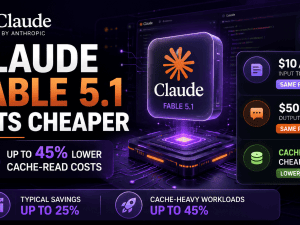
Claude Sonnet 5 launched in June at a discounted introductory price, with a clear expiration date attached. That discount was supposed to end on September 1, 2026, and prices were set to jump 50 percent. On August 10, Anthropic announced it would not happen. The discount is now the permanent price.
On its own, that looks like straightforward good news for anyone building on Claude. It gets more interesting once you put it next to what Anthropic is reportedly doing at the exact same time: preparing for what could become the largest IPO in history.
Key Takeaway
Anthropic made Claude Sonnet 5’s $2/$10 per million token pricing permanent instead of letting it rise to $3/$15 as planned. At the same time, investors are reportedly expecting Anthropic to pursue a $2 trillion valuation in an October IPO. Locking in a cheaper price while chasing that kind of valuation only works if Anthropic is confident it can keep growing fast enough to make up the difference elsewhere.
What Actually Changed With Claude Sonnet 5’s Price
Anthropic launched Claude Sonnet 5 on June 30, 2026, positioning it as its most capable mid-tier model yet, priced at $2 per million input tokens and $10 per million output tokens. That rate was always described as introductory, with standard pricing of $3 and $15 scheduled to take over on September 1.
On August 10, Anthropic reversed that plan. The company’s own announcement put it plainly: the $2/$10 rate would remain unchanged, and the scheduled increase would not happen. For anyone who had already built a budget around the September price jump, that is a real, if quiet, saving.
There is a catch worth knowing before this sounds too generous. Sonnet 5 shipped with a new way of counting text into tokens, and that new system counts roughly 30 percent more tokens for the same piece of text than the previous model did.
So a task that used to cost a certain amount on the older Sonnet can end up costing more on Sonnet 5, even at the same headline per-token price. The permanent $2/$10 rate is real, but it is not quite the flat discount it looks like on the surface.
Where This Sits Against the Rest of the Field
Context matters here, and the clearest way to get it is to look at what else is on the shelf right now. Claude Opus 5, Anthropic’s higher tier model, costs $5 per million input tokens and $25 per million output, so Sonnet 5 at $2/$10 is meant to sit well below that as the everyday option.
But OpenAI’s own recent price cuts put its fastest model, GPT-5.6 Luna, at roughly $0.20 per million input tokens and $1.20 output, after an 80 percent cut in July.
Even with Sonnet 5’s price hike canceled, Anthropic’s cheapest current model still costs about ten times more per token than OpenAI’s cheapest current model.
Sonnet 5 is aimed at more demanding, agentic work than Luna is built for, so the two are not a perfect apples-to-apples match, but the gap is real, and it is the kind of number that shows up fast in anyone’s monthly bill once usage scales.
The Much Bigger Story Sitting Next to This One
Here is where this stops being a simple pricing update. According to the Financial Times, citing six people close to Anthropic’s investors, the company is now expected to pursue an IPO as early as October 2026, at a valuation of $2 trillion or more. If that number holds, it would surpass SpaceX’s $1.77 trillion debut this past June as the largest public offering in history.
Every outlet covering this is careful about one thing, and it is worth repeating here too. The $2 trillion figure is investor and banker speculation, not a number Anthropic’s own executives have confirmed, even privately.
Anthropic’s last private funding round, a $65 billion raise in May 2026, valued the company at $965 billion. A $2 trillion IPO would be roughly double that in about five months, which is an extraordinary jump even by this industry’s standards.
The case investors are reportedly making rests on revenue growth. Anthropic’s annualized revenue passed $47 billion in May, and Bloomberg has reported that its second quarter 2026 revenue grew at least fourteen times year over year.
Investors are underwriting projections that annualized revenue could reach $100 to $120 billion by the end of the year.
One investor told the Financial Times that a company growing 800 percent a year would, at the low end, justify a 30-times-revenue multiple, which alone would put Anthropic closer to $3 trillion.
Why Canceling a Price Hike Makes Sense Right Before an IPO
At first glance, giving up on a planned 50 percent price increase seems like an odd move for a company reportedly chasing a record-breaking valuation. Higher prices usually mean higher revenue, and higher revenue is exactly what supports a bigger valuation story.
But the more likely explanation points the other way. Locking in a lower, permanent price makes Claude a harder sell to walk away from, at a moment when developers have real, cheaper alternatives sitting right next to it.
Keeping usage growing, and keeping developers building on Claude rather than switching to something like GPT-5.6 Luna, matters more to an IPO story than squeezing extra revenue out of existing customers.
A company trying to prove it can grow 800 percent a year needs people to keep choosing its product, not just pay more for it.
This is the same basic logic behind Nvidia’s massive AI financing plan and the broader price competition between AI labs this year. Growth and market share, not short-term margin, are what the entire industry is currently being valued on.
What This Means If You Actually Use Claude
If you build with Claude, whether that is through the API, Claude Code, or using its artifact feature the way we did to build three working apps in an hour, the practical upshot is simple: the $2/$10 rate for Sonnet 5 is now something you can plan around long term instead of budgeting for a jump that was supposed to arrive in a few weeks.
The bigger IPO story matters less for your day-to-day usage and more as a signal of where the money in this industry is actually flowing.
Whether Anthropic actually lists in October, and whether it actually reaches anywhere near $2 trillion, remains genuinely uncertain.
What is not uncertain is that the company is betting its future on convincing the market it can keep growing at a pace almost nobody in tech history has sustained for very long. Permanent, competitive pricing on its everyday model is one small piece of making that story credible.
















Join the discussion Tap to open the comment form +