


Knowing how to use ChatGPT, Claude or Gemini is useful. But as businesses move from experimenting with AI to putting it into everyday operations, another skill is becoming more important: knowing how to make AI work inside a real business.
Anthropic’s $100 million investment in its Claude Frontier Academy puts that shift into focus. The company plans to train 10,000 Frontier Deployed Engineers by the end of 2027—people who can help organisations take AI projects from an idea through deployment and into real-world use.
You don’t need to work for Anthropic to learn the lesson.
If you’re learning AI for your career, freelance work or business, the question is no longer just “How good am I at prompting?”
A better question is: “Can I use AI to solve a real problem from beginning to end?”
Takeaway: Don’t build your AI skills around knowing the newest chatbot. Build them around solving useful problems with AI.
The Skill Gap Is Between Using AI and Applying It
Imagine a business receiving hundreds of customer enquiries every week.
Using AI could mean asking Claude to draft replies.
Applying AI could mean building a workflow that sorts incoming enquiries, prepares a response, sends unusual cases to a human and records what happened.
The second approach requires more than prompting. You need to understand the business process, decide where AI belongs, connect the relevant tools and check whether the system is actually helping.
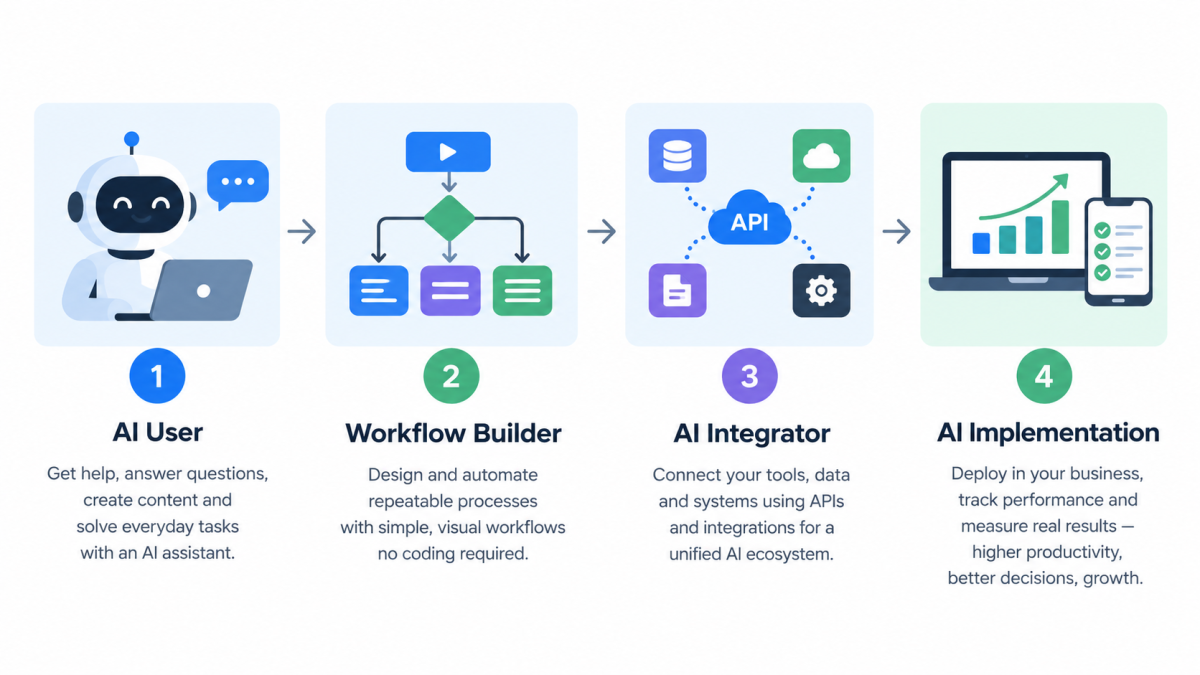
Four Skills Worth Building
1. Use AI Well
Start with the basics: research, analysis, writing, document work and repetitive tasks.
Learn how to provide useful context, give clear instructions, check outputs and recognise when the model is wrong.
Prompting still matters. It just shouldn’t be the end of your learning.
2. Understand Workflows
Learn to break a business process into steps:
Input → AI task → human check → action → result
Once you can see work this way, you can identify where AI or automation can remove unnecessary manual effort without handing everything over to a model.
3. Connect the Tools
Real businesses already use forms, websites, spreadsheets, CRMs, email and databases. AI becomes more useful when it can work with those systems.
That makes basic knowledge of APIs, JSON, webhooks, authentication and automation increasingly useful.
You don’t have to become an advanced programmer first. You do need to understand how information moves between systems.
If you’re interested in the practical side of building with AI, see our guide on building real applications with Claude.
4. Think About Deployment, Not Just Demos
A working demo is only the beginning.
A real implementation also raises questions about data, permissions, security, human approval, reliability and measurement.
That’s why AI implementation combines technical knowledge with an understanding of how a business actually operates.
For practical considerations around AI systems and data, see our AI privacy and security checklist.
What This Looks Like in Nigeria
This isn’t only a Silicon Valley trend.
Recent forward-deployed engineering roles in Nigeria show employers looking for combinations of AI deployment, software integration, APIs, customer workflows and production systems.
For example, a Lagos-based role at Pastel involves deploying and integrating AI systems into customer environments, including banking and fintech APIs. Another Nigeria-based role at Sand Technologies involves working directly within a client environment to build and deploy production solutions.
These roles are specialised, and their existence does not mean every AI learner should aim for the same job. But they show something useful: the ability to connect AI with real-world business operations is already appearing in African technology work.
If you’re looking at the broader AI job market, our guide to AI jobs that don’t require traditional coding is a useful companion.
A Simpler 90-Day Learning Plan
Days 1–30: Get Good at Real AI Work
Pick one or two AI tools and use them on actual tasks. Don’t spend the month testing every new model.
Build repeatable workflows for research, documents, customer enquiries, content or data analysis.
Days 31–60: Connect Things
Learn one automation platform and basic API concepts.
Build small workflows such as:
Form → AI classification → human approval → email → record
The goal is to understand how the pieces interact, not to create an impressive-looking demo.
Days 61–90: Solve One Real Problem
Choose one business process and improve it from beginning to end.
Document the original problem, your workflow, where AI is used, where human review remains and what changed.
If you can measure the improvement, include the numbers.
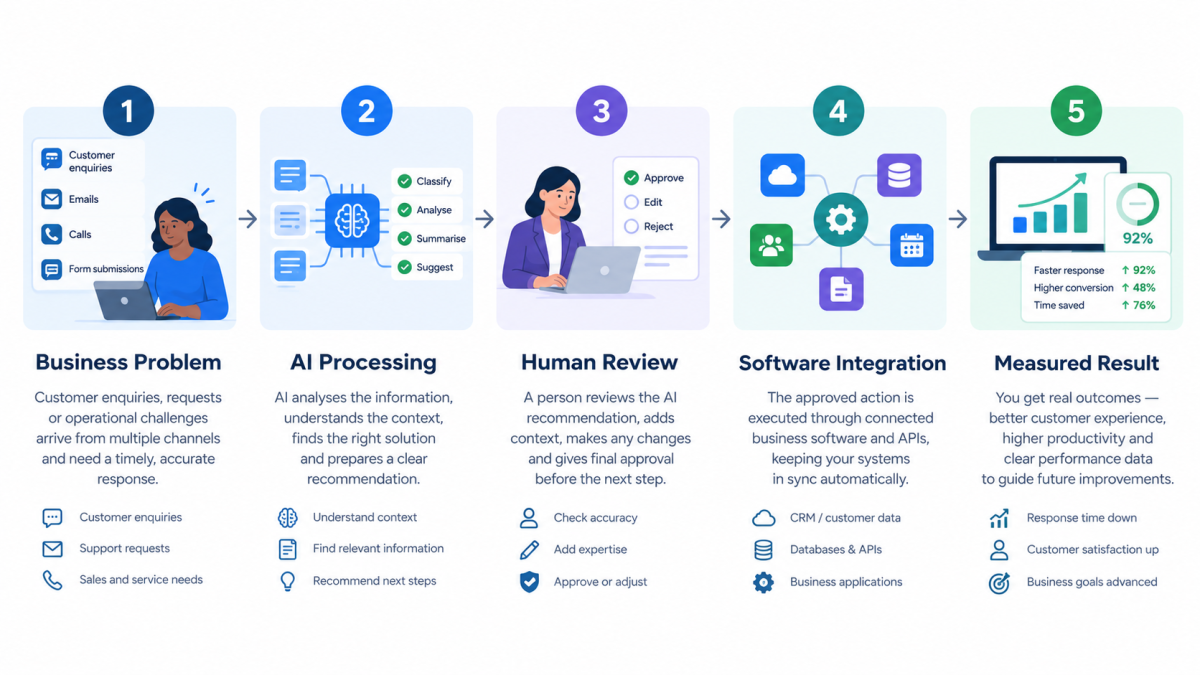
Our practical advice: A small working solution built around a real business problem can demonstrate more useful ability than a long list of AI certificates.
Don’t Chase Every New AI Tool
The AI landscape changes too quickly to build your entire learning strategy around individual tools.
Tools will change. The underlying skills are more durable:
- finding worthwhile problems
- mapping workflows
- using AI reliably
- connecting systems
- handling data responsibly
- measuring results
Anthropic’s $100 million programme is ultimately useful as a signal of this shift. The company isn’t investing that money simply to teach people how to chat with Claude. It is building a pipeline of people who can help organisations put AI to work.
That is the part worth paying attention to.
You don’t need to learn every AI tool. Learn how to make one useful solution work.


























Conversation (0)