

Before I built my first Google Opal tool, I spent twenty minutes trying to find the pricing page. I scrolled the interface three times looking for a usage counter, a credit balance, or a plan selector.
Nothing. Just a blank canvas and a text bar. That is the moment most people assume Google Opal is completely unlimited and free forever — and that assumption leads directly to the frustration of hitting unexpected slowdowns during heavy build sessions without understanding why.
Google Opal is free, and genuinely so for the vast majority of use cases. But “free” in the context of a Google Labs AI product backed by Gemini’s infrastructure means something more specific than a zero-dollar price tag.
This post tells you exactly what you get, exactly where the real limits live, and exactly how to build seriously within them before any paid structure arrives.
What “Free” Actually Means for Google Opal Right Now
Google Opal is completely free during its public beta phase. There are no paid tiers, no subscription options, no credit card fields anywhere in the sign-up or building experience.
You access Opal at opal.google with a standard Google account — the same one you use for Gmail or Google Docs — and you start building immediately.
Google has not announced pricing and has not committed to a timeline for when the beta ends. For the foreseeable future, the tool costs nothing to access and nothing to run.
The nuance that most coverage glosses over is this: free access to Opal does not mean free unlimited compute. Opal runs on Gemini for text processing and Imagen for visual generation — Google’s most capable AI models.
Every time someone uses an Opal you built, or every time you test and refine during the building process, those interactions consume Gemini API quota.
Google’s AI usage policies and Gemini model limits apply underneath the surface even when the Opal interface itself shows no visible counter or cap.
You are not paying with money. But you are drawing on compute resources that Google is absorbing during the beta, and that reality shapes how the platform behaves under heavy use.
If you are new to what Opal actually is and how it works at a structural level, the complete Google Opal beginner’s guide gives you the full picture before these limits become relevant.
What You Get on the Free Plan: The Full Picture
Access to Gemini and Imagen Models
Every Opal you build runs on Gemini for text understanding and generation, and Imagen for image creation when your workflow includes visual outputs.
These are not stripped-down versions of Google’s models reserved for free users — they are the same Gemini models that power Google’s paid AI products.
The quality of what Opal produces for free is genuine and consistent with what you would expect from a current-tier Gemini experience.
The limitation is not on quality. It is on sustained high-volume usage, which matters differently depending on what you are building and who is using it.
Unlimited App Creation and Publishing
There is no cap on how many Opal tools you can create, save, or publish. You can build a content research assistant, a social media repurposer, a client proposal generator, and a YouTube script outline tool all in the same afternoon — and publish all four with shareable links — without hitting any restriction on the number of tools.
The free plan’s limits apply to usage volume, not creation volume. This distinction matters practically: you can build a comprehensive personal toolkit of specialised tools for your workflow without any paywall standing between you and the creation side of the platform.
Full Visual Workflow Builder
The entire Opal editor is available on the free plan — the natural language description bar, the visual block interface with Input, Generate, and Output nodes, the Preview panel, the App view, and the Remix functionality for building on top of Gallery examples.
There is no “Pro editor” locked behind a paywall. What you see in every Opal tutorial and review is exactly what free users access.
The building experience on the free plan is identical to whatever paid experience eventually arrives — the difference will almost certainly be in usage capacity and advanced integrations, not in the builder itself. The step-by-step Opal tutorial walks through the full editor experience so you know exactly what you are working with.
Google Workspace Integration
Free users can connect their Opal workflows to Google Docs, Sheets, Gmail, and Drive through the platform’s Workspace integration layer.
This means the tools you build can pull information from your existing Google documents, write outputs directly to Sheets, or trigger workflows that touch your Drive files — without any additional cost or configuration beyond signing in with your Google account.
For small business owners and freelancers whose work already lives inside Google’s ecosystem, this integration is genuinely valuable and genuinely free during the beta period.
The Gallery and Community Tools
Every tool in Opal’s Gallery — including the Blog Post Writer, the Video Hooks Brainstormer, the Product Researcher, and every other community-built Opal — is accessible and remixable on the free plan.
You can open any Gallery tool, run it with your own inputs, and build on top of it using the Remix feature without any restriction.
This gives free users an immediate head start on building because you are not starting from a blank canvas unless you choose to.
The community’s work becomes your foundation, and everything you improve or customise becomes your own published tool.
Where the Real Limits Live
Understanding where Opal’s free tier genuinely constrains you requires understanding how Gemini quota consumption works underneath the platform.
Every Generate block in your Opal workflow makes a call to Gemini. A simple single-step Opal makes one Gemini call per user interaction.
A complex multi-step Opal with three chained Generate blocks makes three Gemini calls per user interaction. When you share a published Opal with a wide audience — embedding it in a blog post, distributing it to a newsletter, or posting the link publicly — every person who uses it generates those Gemini calls.
High-traffic shared tools can accumulate significant compute consumption quickly even when each individual interaction seems minor.
The Behaviour You Actually See
Most individual users building and testing personal tools will never experience any meaningful limitation during the current beta period. Google is absorbing the compute costs as part of the beta economics — getting real usage data is worth the infrastructure expense at this stage.
Where you start to see throttling or slowdowns is in two specific scenarios: intensive building sessions where you are testing and regenerating outputs repeatedly in a short period, and widely-shared public tools where many concurrent users trigger Gemini calls simultaneously.
Neither of these is a hard wall with an error message — they present as slower response times and occasional generation delays rather than a blocked access screen.
The Confusion With Opal.so
One limit that catches people before they even get started is finding the wrong platform. Opal.so is a completely separate screen time management app with no connection to Google whatsoever. It is a different company, a different product, and a different purpose.
Google’s Opal lives at opal.google — not opal.so, not opal.com, not any other domain. If you land on opal.so looking for Google’s AI app builder, you are in the wrong place entirely.
This sounds like a minor point but it causes genuine confusion for a surprising number of people discovering the tool for the first time, and it is worth being explicit about before you invest time exploring the wrong product.
The Outdated Alternative: What “Free AI App Building” Used to Look Like
Before Opal, building something resembling a shareable AI-powered tool without paying for professional software required either using Zapier’s free tier — which limited you to 100 tasks per month and basic single-step automations — or learning to use the OpenAI API directly, which requires a developer account, billing setup, understanding of token pricing, and the ability to write or at least configure code.
Neither option was accessible to the audience Opal is designed for. A freelancer in Lagos or a content creator in London who wanted to build a tool their clients could use had no realistic free path to doing that without either significant technical investment or ongoing subscription costs.
Opal changes that equation completely. The building experience requires no technical knowledge. The published tool is immediately usable by anyone with a Google account.
The cost is zero. That combination — zero friction, zero cost, zero technical requirement — is genuinely new in the no-code AI builder space and it is the reason Opal is worth taking seriously even before its pricing structure is finalised.
Understanding how this fits alongside other free AI tools is part of what Google’s free AI tools that are actually worth using covers in full — Opal is the newest addition to a suite that has been expanding steadily.
What Practitioners Are Saying About the Free Tier
The honest picture from people actively building with Opal in 2026 is consistently positive for personal and small-team use, with specific caveats around scale.
Creators building tools for their own workflows — content research assistants, proposal generators, social media content engines — report no meaningful limitations during normal daily use.
The free tier covers everything they need without any friction that would push them toward a paid alternative.
The friction appears specifically when people attempt to build and share tools at scale — embedding a publicly accessible Opal in a high-traffic blog post or distributing it to a large newsletter audience.
At that point, the underlying Gemini quota consumption becomes visible through slower response times.
The community consensus from these experiences is practical: build your tools and use them for your own work and direct client relationships freely, but be intentional about public distribution until Google’s formal usage policies for the post-beta period are announced.
This connects directly to the broader conversation about what actually works when making money with AI tools — the tools that generate sustainable income are always the ones you understand at the infrastructure level, not just the interface level.
What Pricing Will Probably Look Like When It Arrives
Google has not announced pricing and the beta has no confirmed end date. But based on how Google prices its other AI products and the infrastructure Opal runs on, the most informed expectation from industry analysts is that Opal will be bundled with or priced alongside Gemini offerings rather than sold as a standalone Opal-only subscription.
This means the most likely pricing path is that heavy Opal users end up on a Gemini Advanced or Google AI Pro plan that includes Opal access as one of the bundled tools — similar to how Gemini features are already bundled with Google Workspace subscriptions.
For light to moderate personal use — building and running tools for your own workflow, sharing with specific clients, and maintaining a personal toolkit of ten to fifteen published Opals — the free tier will almost certainly remain accessible in some form even after commercial pricing launches.
Google’s pattern with Labs products is to maintain a meaningful free tier that covers individual and hobbyist use while monetising the higher compute consumption of production and enterprise workloads.
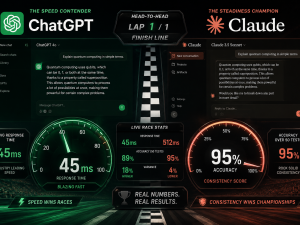
The comparison of Opal against Claude and ChatGPT gives useful context for how this pricing approach compares to what the competing platforms already charge.
How to Get the Most Out of Free While It Lasts
The single most impactful thing you can do with the current free tier is build your toolkit now while compute is uncapped.
Every tool you build and refine during the beta period is a finished asset you own regardless of what pricing structure eventually arrives.
A content brief generator configured to your niche, a client proposal tool built around your service offering, a social media content engine calibrated to your brand voice — these take thirty minutes to build and provide ongoing value indefinitely.
Building them now costs nothing. Building them after a paid tier launches will cost something.
Design your tools to be efficient in their Gemini consumption. A tool with one well-written Generate step that covers multiple outputs in a single call uses less underlying compute than a tool with four separate Generate steps each producing one output.
What You Need To Understand When Building With Opal
During the refinement process, test with short representative inputs rather than long ones — the quality signal you need for calibration does not require exhausting every prompt variation with maximum-length test data.
Save you through real-world testing for the final version after the workflow architecture is confirmed. The five profitable things to build with Google Opal gives you the specific tool blueprints worth prioritising during this free window.
Export your important outputs consistently. Every brief, proposal, research result, or content pack that an Opal produces should be saved to Google Docs or Sheets immediately rather than left inside the Opal interface.
This protects your work from any future platform changes and creates a growing archive of AI-assisted work that has real business value independent of whether Opal continues in its current form.
Building the habit of treating Opal outputs as assets — not temporary chat responses — is what separates the people who extract lasting value from this free window from the people who use it casually and end up with nothing to show for the time they invested. The skills that survive the AI era are built through exactly this kind of intentional, systematic use of early-stage tools.








Join the discussion Tap to open the comment form +