

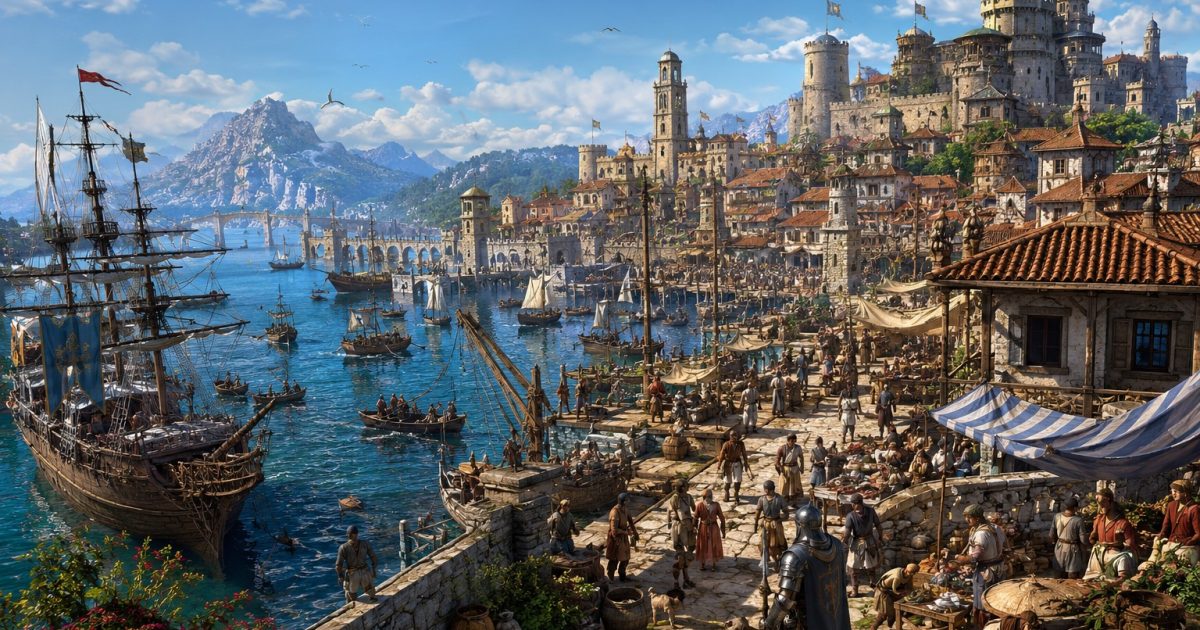
A viral prompt making the rounds on Reddit asks ChatGPT to start from a complete creative blank slate, ignore previous preferences and choose the subject, style and composition of an image entirely on its own.
I’ve tested AI image prompts before, including our tested Midjourney prompts, but this one caught my attention for a different reason. Instead of running it once and judging the result, I ran the exact prompt three separate times.
The images were impressive. But the more interesting result was how often they converged on the same kind of world.
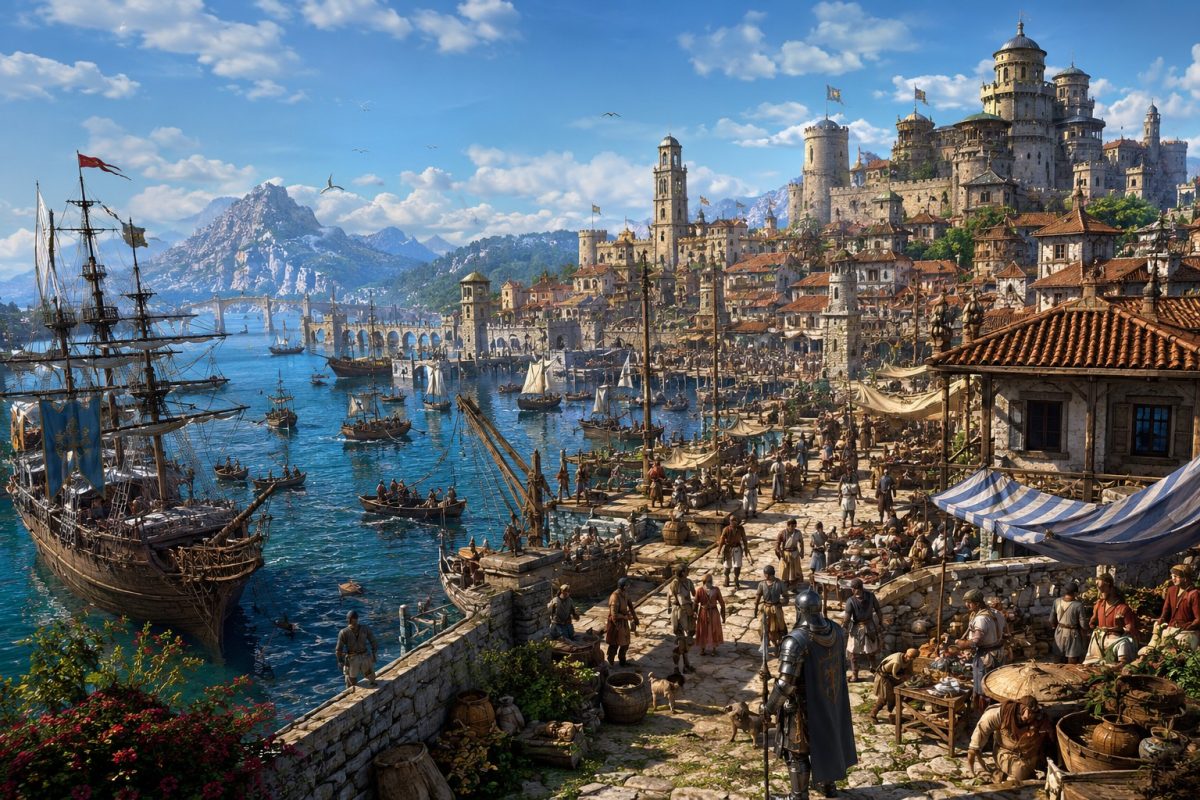
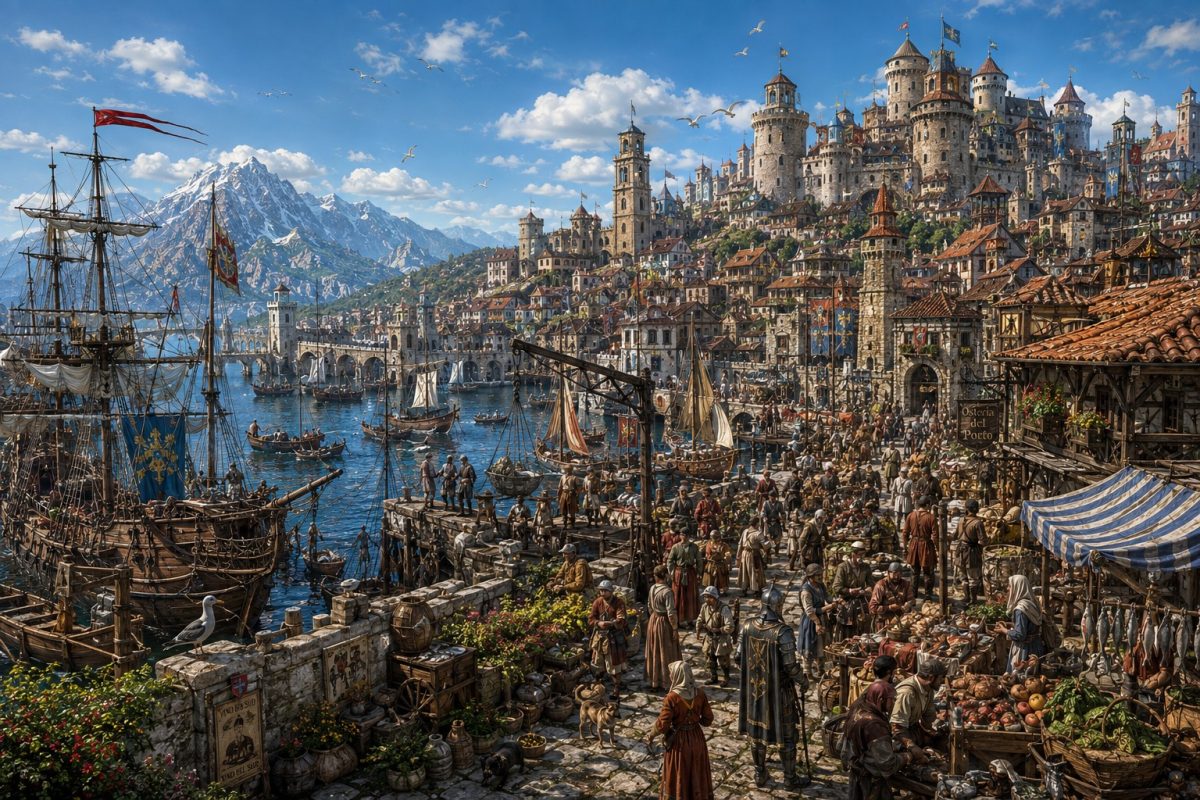
Key takeaway: In my three runs, ChatGPT repeatedly chose a densely detailed fantasy medieval port city with castles, ships, markets and a hillside skyline. The images were not identical, but the broad subject and composition were remarkably similar.
The Exact Prompt I Used
I did not add a subject, historical period, artistic style or setting. And i used the prompt below as the creative instruction:
Start from a complete creative blank slate. Ignore our previous images, conversations, and my personal preferences. Choose the subject, style, setting, and composition entirely yourself. Create one original render with as much meaningful visual information as possible. Push the density of distinct details, textures, materials, structures, and small discoveries while preserving clarity and a coherent composition. Make it rewarding to explore closely, with new details emerging as I zoom in. Use the highest resolution and rendering quality available. Prioritize actual resolved detail over repetitive filler, visual noise, or artificial sharpening. Take full creative control and generate the image directly.
I then repeated the same test twice more rather than selecting only the result I liked best. That matters because the point was not to demonstrate that ChatGPT can make an impressive fantasy image. It was to see what happened when the same open-ended instruction was repeated.
What Happened Across the Three Runs
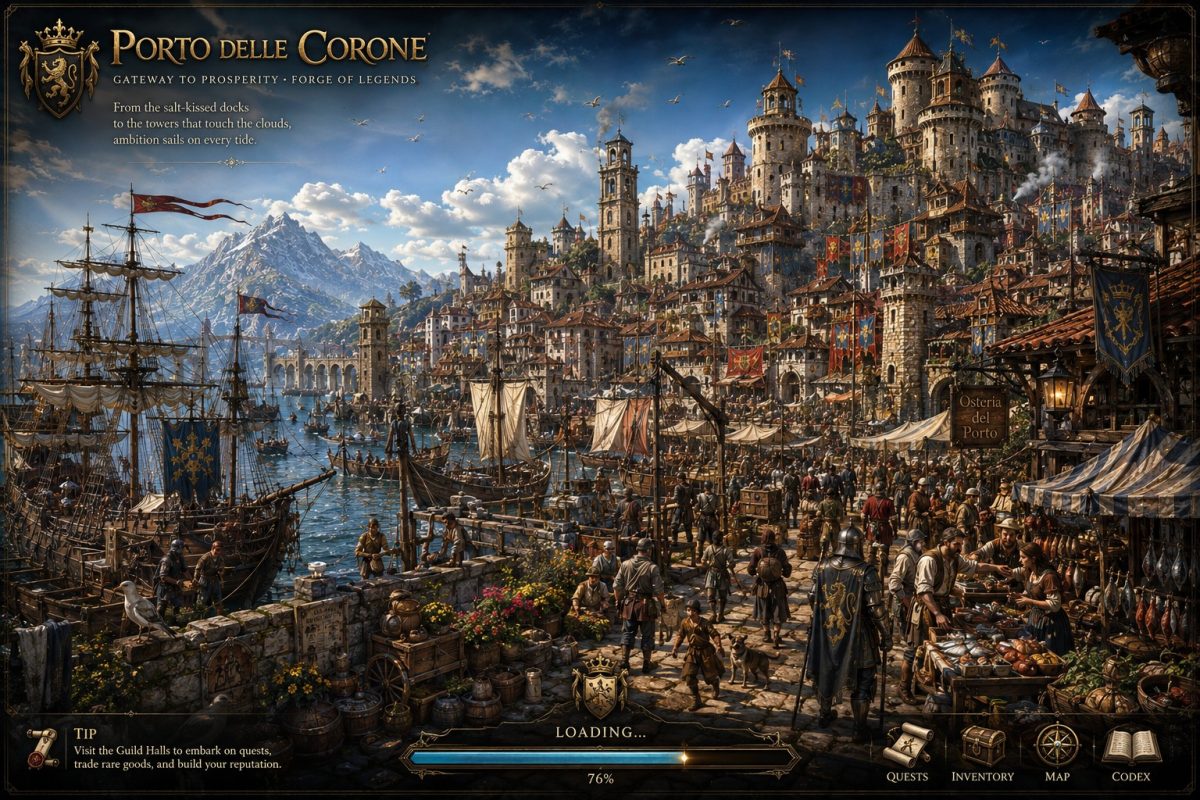
All three results converged on the same broad visual idea: a fantasy medieval harbour city built around a busy waterfront, with sailing ships, stone buildings, market activity and a large castle-covered skyline rising behind it.
The details changed between generations, but the underlying composition remained surprisingly close. The harbour stayed to the left, the dense settlement occupied the middle and right, and the elevated castle complex dominated the background.
One run took the idea in a particularly unexpected direction. Instead of presenting the scene simply as an artwork, ChatGPT turned it into what looked like a video game loading screen. It invented a title, Porto delle Corone, along with a tagline, gameplay tip, loading bar and interface icons.
Nothing in my prompt mentioned video games, loading screens or interface design.
That was arguably the most interesting creative decision of the three.
The model didn’t just choose a subject. In one run, it invented a context for that subject.
But Was the Prompt Really Unconstrained?
Not entirely.
That is probably the most important correction to the viral framing.
The prompt gives ChatGPT considerable freedom over what to create, but it gives the model a long list of instructions about how the image should behave.
It asks for maximum meaningful detail, dense textures, multiple materials, distinct structures, visual discoveries, clarity, coherent composition, high rendering quality and close-up exploration. Those are strong creative constraints even though the subject itself is unspecified.
OpenAI’s current guidance for image generation similarly emphasizes that prompts can steer the subject, setting, style, composition, lighting and other constraints. Its guidance also recommends clear, specific instructions when a particular visual outcome matters.
So this experiment does not show that ChatGPT has a single hidden “favourite image” that it will always generate when given freedom.
It shows something narrower and more useful: when the subject is left open but the model is strongly encouraged to produce a dense, coherent and visually impressive scene, repeated generations can converge on a similar type of composition.
Why Did the Images Converge?
There are several possible explanations, and this small test cannot establish which one is responsible.
One possibility is that the prompt itself makes elaborate fantasy environments especially suitable. A medieval harbour naturally provides exactly the ingredients the instruction asks for: ships, architecture, people, markets, textures, materials, distant scenery and dozens of small objects that can be packed into a coherent composition.
Another possibility is that image-generation models have learned strong associations between visually impressive, highly detailed scenes and the kinds of subjects that work well for demonstrating those capabilities.
OpenAI describes its current image models as capable of complex compositions, detailed visual instructions and creative transformations, but also notes that results remain imperfect.
My three generations therefore shouldn’t be treated as proof of a particular internal mechanism. They are an observation worth testing again.
What the Experiment Actually Teaches About AI Image Prompts
If you want radically different images, telling the model to “choose everything yourself” may not be the most reliable way to get there.
In my test, the model had freedom over the subject but still received a strong aesthetic brief: make something extremely detailed, coherent, dense and rewarding to explore.
That combination may naturally narrow the range of results.
For genuine variety, changing one meaningful constraint at a time is likely to be more informative. Give the model a different subject, period, environment, mood or visual objective and then compare the results.
In other words, creative freedom and visual randomness are not the same thing.
Try the Experiment Yourself
I’ve included all three of my actual results below so you can compare them rather than taking my description on faith.
If you run the exact prompt yourself, don’t assume you should get a medieval harbour. My test only involved three generations, which is far too small a sample to establish a universal behaviour. Your results could be different depending on the model version, account, conversation context and generation itself.
That’s actually what makes the experiment worth repeating.
Three Images, One Interesting Pattern
The striking part of this experiment wasn’t that ChatGPT could create a beautiful fantasy city. Modern image-generation systems are designed to produce detailed original images from natural-language instructions, and OpenAI now explicitly supports iterative image creation and refinement in ChatGPT.
The interesting part was what happened when I removed control over the subject and repeated the experiment.
Three generations did not produce three completely unrelated creative directions. They produced variations around the same broad visual idea, while still leaving room for individual creative choices such as the unexpected game interface in one result.
That’s not enough evidence to say this is how ChatGPT will always behave. But it is enough to make the viral prompt more interesting than it first appears.
Sometimes, giving an AI model “complete creative freedom” doesn’t reveal unlimited randomness. It reveals the patterns that emerge when the model has to decide what kind of thing best satisfies the constraints you’ve given it.























The repeated worldbuilding is the most interesting part—despite being told to start from a blank slate, ChatGPT still seems drawn to the same visual themes and atmosphere. It raises a useful question about whether “creative freedom” in AI reveals genuine preference or simply patterns baked into its training.
The repeated return to the same kind of world is fascinating—it suggests ChatGPT’s “creative freedom” still reflects built-in patterns rather than true randomness. I’d be curious whether changing the prompt’s wording or asking for radically different emotional tones would break that consistency.