


Most people who discover Google Opal spend their first hour building things that are interesting but not income-generating. A quiz tool. A joke generator. A random recipe creator. Fun to build, useless for business.
This post is for the people who want to skip that phase entirely and go straight to building things that have a clear path to money — either by saving hours of paid work, by powering a freelance service, or by creating tools other people will pay to use.
Google Opal is completely free right now, which means every profitable use case in this list costs you nothing to build and nothing to run.
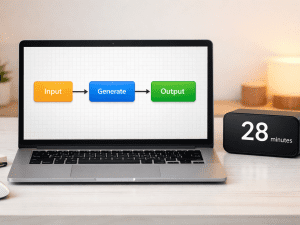
The only investment is the thirty minutes it takes to build each one. If you are not yet familiar with how Opal works, the complete Google Opal beginner’s guide and the step-by-step tutorial cover the platform from scratch before you start building.
Why Google Opal Is Worth Building On Right Now
Google has confirmed plans to release an Agent Marketplace for Opal in 2026 — a built-in ecosystem where creators can publish, share, or sell their AI apps directly inside Google’s infrastructure. That announcement changes the calculus for anyone building Opals today.
The tools you build now, while Opal is free and the marketplace is not yet live, become your catalogue of assets the moment that marketplace opens.
Even without the marketplace, the five builds below have clear income paths today — through freelance services, client deliverables, content business efficiency, and audience tools.
None of them require you to wait for a future feature. They work now, on the free tier, with tools that already exist. This is the window. Let us use it.
1. A Custom Content Brief Generator for Freelance Clients
Content briefs are one of the most consistently in-demand freelance deliverables in 2026. Every business running a blog, a content team, or an SEO strategy needs them.
Creating one manually — researching the topic, identifying the target audience, mapping search intent, outlining the structure, suggesting internal links — takes a skilled writer two to three hours per brief.
Build an Opal that handles this research and structuring in minutes and you have the foundation for a competitive, efficient freelance service.
Use this prompt to build it:
“Build an app where the user inputs a blog topic, a target audience description, and a primary keyword. The app researches current search intent for the keyword, identifies three competing content angles, and outputs a complete content brief including a recommended title, H2 structure with five sections, key points for each section, suggested word count, three internal link opportunities, and one data point or statistic to include.”
Content briefs are in consistent demand on platforms like Fiverr and Upwork, and freelancers who can deliver them reliably and quickly build strong repeat client relationships.
The real advantage this Opal provides is not just speed — it is the ability to take on more clients without proportionally more working hours, which is how a freelance content service becomes genuinely scalable.
If you secure clients at a competitive market rate and deliver consistently strong briefs, this can become a structured side income stream with real staying power.
For freelancers building income with AI, this is the kind of high-margin, low-overhead service that compounds as you build a client base.
The principles behind what actually works when making money with AI apply directly here — structured, repeatable services with clear deliverables and real demand.
2. A Business Website Analyser for Local Business Clients
Most small businesses in Nigeria, the US, the UK, and India have websites that are years out of date, poorly structured, and missing basic conversion elements.
They know something is wrong but cannot afford a full agency audit. This is the gap an Opal-powered website analysis tool fills perfectly — detailed, actionable feedback at a price point small businesses can justify and a production cost that makes the service financially sustainable for a solo operator.
Use this prompt to build it:
“Build an app where the user inputs a business website URL and their primary business goal. The app analyses the website’s visible content and structure, then outputs a detailed report covering: clarity of the value proposition, strength of the homepage headline, quality of calls to action, trust signals present or missing, mobile readability assessment, and five specific, prioritised recommendations for improvement with the expected impact of each.”
The output needs light editing to personalise it — five to ten minutes of review and refinement per report.
Reach potential clients through local business Facebook groups, LinkedIn outreach to small business owners, or by offering a free audit sample to one business in each niche you target.
Once a business owner sees a specific, credible analysis of their own website with prioritised recommendations, the conversation about implementation — which you can offer as an additional service — becomes natural.
This builds a service business where the Opal handles the research and analysis and your value is in the packaging, delivery, and follow-through.
Understanding how AI is transforming small businesses is the knowledge that makes your positioning credible when you approach these clients.
3. A Social Media Content Engine for Brand Clients
Social media management is one of the most consistently outsourced tasks for small and medium businesses. Most business owners know they need to post consistently.
Almost none of them have the time or creative energy to do it well. A social media content engine built on Opal gives you a repeatable production system that can serve multiple clients simultaneously — each one getting customised content without you writing from scratch every time.
Use this prompt to build the core tool:
“Build an app where the user inputs a business name, their industry, their target customer, and one topic or theme for the week. The app generates a complete weekly social media content pack including: three Instagram captions with hooks and hashtags, two LinkedIn posts in a professional conversational tone, one Twitter thread with four tweets, and a suggested posting schedule with the best days and times for each platform.”
Build a separate version of this Opal for each client niche you serve — a version configured for Nigerian fashion brands, one for US fitness coaches, one for UK property businesses.
Each version has the same structure but the tone, vocabulary, and content style are calibrated to that specific niche.
This is the approach that separates generic social media managers from specialists who can charge premium rates.
Social media management retainers are one of the most stable recurring income streams available to freelancers, and a tool that dramatically reduces your production time per client makes the service model genuinely sustainable at scale.
The smartest content businesses make money beyond single revenue streams — social media management gives you recurring income that blog posts alone cannot provide.
4. A YouTube Video Hook and Thumbnail Concept Generator
The YouTube creator economy is enormous and growing. The Video Hooks Brainstormer is already one of the highest-rated tools in the Google Opal Gallery specifically because it solves a repeat problem creators face every week — coming up with hooks and concepts that actually drive clicks.
The demand for this kind of creative assistance is proven. What is not yet proven is someone building a premium, niche-specific version of this tool and offering it as a paid service or lead magnet to a targeted creator audience.
Use this prompt to build a version that goes beyond the generic Gallery tool:
“Build an app where the user inputs their YouTube channel niche, their target viewer, and a video topic. The app generates: five hook variations for the first thirty seconds ranked by psychological trigger type, three thumbnail concepts with specific visual descriptions and text overlay suggestions, five title variations ranked by click potential with an explanation of why each works, and one alternative video angle that might perform better than the original topic.”
There are two income paths here. The first is offering this as a freelance service to YouTubers — a monthly creative package that gives them hooks, thumbnails, and titles for every video they plan to publish.
The second is using it as a lead magnet for your own audience — offering free access to the tool in exchange for an email address, building a list of active YouTube creators you can later offer courses, tools, or services to. Both paths work and they are not mutually exclusive.
If you are already building faceless YouTube channels yourself, the full SuperGrok and ElevenLabs blueprint shows how this tool fits into a complete production workflow.
5. A Lead Magnet and Digital Product Creator
Lead magnets — free resources that collect email addresses — are one of the most valuable assets any online business can own.
The problem is that most people either cannot create them quickly enough to test different formats or cannot produce them at the quality level that makes someone feel the trade of their email address was worthwhile. Opal changes both of those constraints simultaneously.
Use this prompt to build a lead magnet generator:
“Build an app where the user inputs their business niche, their target customer’s biggest problem, and the format they want the lead magnet in — checklist, mini guide, or email series. The app generates the complete lead magnet content including a title designed to maximise opt-ins, a compelling description for the landing page, and the full content structured for the chosen format — with clear sections, actionable steps, and a final call to action that leads naturally to the user’s paid offer.”
The income path for this one is wider than the others because it serves multiple business models simultaneously.
You can use it for your own business — building and testing lead magnets for your content in an afternoon rather than a week.
You can offer it as a service to other business owners who need lead magnets but cannot produce them. Or You can build the lead magnets, sell them as standalone digital products on Gumroad or Payhip, and earn from each download.
Or you can combine all three — use the tool for your own business, offer the service to clients, and package the best outputs as sellable templates.
This versatility is exactly what makes Opal valuable for entrepreneurs who want to rapidly prototype business ideas — the same tool produces value across multiple areas without any additional investment in time or money.
The broader context for this approach is covered in the guide to making money with AI tools that actually work.
The Window Is Open — And It Will Not Stay This Wide
Every tool in this list earns through the output it produces — the brief, the audit, the content pack, the hooks, the lead magnet. But there is a longer-term layer building underneath all of them.
When Google’s Agent Marketplace launches, the polished, tested tools you built during the free beta period become your digital product catalogue — distributed by Google’s own infrastructure.
Start building now and treat every Opal you create as an asset, not just a workflow.
The skills that survive the AI era are built by people who recognise early-stage opportunities and move on them before the consensus arrives.
Opal is at exactly that stage right now. Pick one of these five builds, follow the prompt, and have a working tool live before the end of today. The difference between people who benefit from this window and people who read about it later is simply who started first.


















Join the discussion Tap to open the comment form +