


There is a version of online income that does not require you to build a personal brand, film yourself on camera, or spend eighteen months growing an audience before you see your first dollar.
Learning how to make money as a video clipper is one of the most practically accessible digital skills available in 2026, and it is growing faster than most people in mainstream online business communities have noticed.
I started exploring this model specifically because of how structurally different it is from every other content monetization path I had studied — and what I found was a legitimate freelance business framework hiding inside what most people dismiss as a side hustle.
This guide covers everything. The platforms, the real earnings potential, the editing workflow, the compliance rules, the mistakes that quietly kill most beginners, and the precise sequence of steps that turns video clipping from a weekend experiment into a consistent income operation.
If you have been looking for a digital business model that rewards skill and consistency rather than celebrity and luck, this is the one worth understanding completely.
The Reality of Video Clipping as a Business Model
Most introductions to video clipping frame it as a passive income stream or a lazy side hustle where you cut videos and watch the money roll in.
That framing sets up the majority of beginners for early failure because it fundamentally misrepresents what the work actually involves.
Video clipping at a professional level is an active, skill-dependent digital business that rewards operators who approach it with the same seriousness they would apply to freelance writing, graphic design, or any other marketable online service.
The honest reality is that your first thirty days will be a learning investment, not a revenue event. You will be building editing muscle memory, developing an instinct for high-retention hooks, understanding how different social media algorithms treat new accounts, and figuring out which campaign types on which platforms suit your specific working style.
Beginners who understand this upfront build sustainable operations. Those who expect immediate significant income quit before their operation has had time to generate any meaningful momentum.
What makes video clipping genuinely compelling as a 2026 business model is the structural shift that has happened in how brands and top-tier content creators manage their distribution.
The economics of maintaining in-house short-form content teams have become increasingly difficult to justify when decentralized marketplaces can connect brands with thousands of independent editors simultaneously, paying only for performance rather than carrying fixed salary overhead.
That structural reality is what has created the growing ecosystem of platforms and communities that professional clippers now operate within.
What Video Clipping Actually Is and How the Money Works
Video clipping, in the context of performance-based income, is the process of taking long-form media assets — podcasts, sports broadcasts, interviews, documentaries, YouTube videos, or brand content — and extracting, reformatting, and distributing them as short-form vertical videos across TikTok, Instagram Reels, and YouTube Shorts.
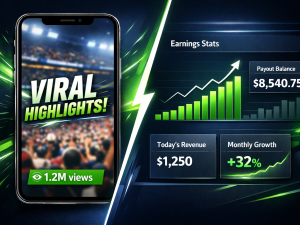
The editor receives a financial payout calculated on a cost-per-mille basis, meaning a fixed dollar amount for every one thousand views the distributed content accumulates on qualifying social platforms.
The payment infrastructure runs entirely through marketplace platforms that use native social media API integrations to verify view metrics in real time.
When you publish a clip and submit the live video URL into the marketplace dashboard, tracking scripts automatically map that video’s performance data to your account balance.
There is no manual reporting, no invoice submission, and no negotiating with clients. The system is automated, transparent, and pays based purely on the performance your content generates.
This model differs fundamentally from traditional video editing freelance work where you charge a flat rate per project. In performance clipping, your income scales directly with the quality of your editing decisions and the consistency of your publishing output.
A single clip that accumulates five hundred thousand views on a platform with a three-dollar-per-thousand rate generates one hundred and fifty dollars from that one piece of content.
An editor publishing five clips daily across three platforms with that kind of average performance is building a genuinely significant monthly income stream.
Understanding the Per-View Payout Structure
Payout rates across performance clipping platforms vary significantly depending on the campaign type, the brand running the campaign, and the platform on which your content is distributed.
On Vyro, the average baseline sits around three dollars per one thousand views across major social platforms, with premium campaigns from high-profile channels occasionally offering higher rates for exceptional editing quality.
Reach.cat operates on brand-set rates that you can review before selecting any campaign, giving you full earnings visibility upfront.
YouTube Shorts consistently commands higher per-view payouts than TikTok in most marketplace structures because the platform’s audience retention metrics and advertiser demand are both stronger for short-form content.
Instagram Reels sits in the middle of that range. Building distribution capacity across all three platforms rather than committing to a single one allows you to capture the best payout rates across the entire ecosystem rather than being limited by any one platform’s current rate structure.
The compounding effect of view accumulation is one of the most important mechanics to understand early. Unlike a flat freelance rate that pays once per project, a high-performing clip continues accumulating views — and therefore earnings — for weeks or months after its initial publication.
Clips that tap into trending topics, emotional sporting moments, or universally relatable content regularly generate the majority of their lifetime view count in the thirty to sixty days after publication rather than in the first twenty-four hours.
The Platforms Where Professional Clippers Operate
Navigating the marketplace landscape is one of the first practical decisions you will make as you build your clipping operation. Each platform serves a slightly different segment of the ecosystem, and understanding those differences before you commit your time and account infrastructure to a specific network is essential.
Vyro occupies the premium end of the creator-facing marketplace segment. Its direct connection to major YouTube networks and high-profile creators like those in the MrBeast ecosystem means the asset quality in its library is consistently high, and the campaigns tend to attract editors who are already producing polished, professional-grade content.
For beginners, Vyro is worth registering on immediately but may require a few weeks of skill development before your clip quality is competitive with the editors already operating in those campaigns.
Reach.cat is structurally better suited for beginners entering the space because its brand-focused campaign model provides clearer creative briefs and more consistent payout documentation.
The platform’s real-time API verification also means you receive accurate performance data without any delay between view accumulation and account balance updates. Starting your first campaigns on Reach.cat while you develop your editing rhythm is a practical approach that many experienced clippers recommend.
Whop operates differently from both of those platforms. Rather than functioning as a direct clip submission marketplace, Whop hosts a growing ecosystem of private clipping communities, creator syndicates, and educational networks specifically built around performance-based video distribution.
Joining an active Whop clipping community gives you access to shared asset libraries, real-time strategy discussions, and mentorship from operators who are already generating consistent income in this space. For a beginner, that community intelligence is worth more than any tutorial in the early months of building your operation.
Choosing Your First Campaign Type
Not all campaign categories perform equally well for new editors, and choosing the wrong campaign type in your first weeks can create a misleading picture of your actual earning potential.
Sports content campaigns — particularly those built around major tournaments, championship rounds, and high-profile athletic moments — consistently produce the highest organic view velocities of any campaign category because the emotional intensity of live sports creates an almost automatic social sharing behavior in viewers.
Podcast and interview clip campaigns are the second most reliable category for consistent performance. Long-form podcast content is abundant, the moments of high informational density or emotional authenticity are identifiable with practice, and the audiences for popular podcast shows are deeply engaged communities that share content actively when a clip captures a genuinely compelling exchange.
The editing skill ceiling for podcast clips is lower than sports content, making this category a practical starting point for editors who are still developing their instinct for high-retention hooks.
If you are starting during a major sporting event window, the FIFA World Cup 2026 clipping opportunity is the most time-sensitive and highest-traffic campaign category available right now.
The concentrated global attention the tournament generates over a six-week period creates a view velocity environment that most evergreen content campaigns cannot replicate.
The Editing Workflow That Separates Earners From Hobbyists
Professional video clippers do not approach each new asset as a blank creative canvas. They operate from established systematic workflows that reduce production time per clip while maintaining consistent output quality.
The difference between an editor producing two clips per day and one producing ten clips per day of equal quality is almost entirely a workflow architecture question rather than a raw speed or talent question.
The workflow begins with asset analysis before a single cut is made. When you open a new long-form video from a campaign library, your first task is a rapid scan specifically looking for what experienced editors call high-retention markers — moments containing sudden narrative shifts, strong emotional peaks, surprising information reveals, or intense physical action.
Developing the instinct to identify these moments quickly is the most important skill you will build in your first sixty days, and it improves dramatically with volume of practice.
Once your high-retention moment is identified, the technical editing phase follows a fixed sequence regardless of the content type.
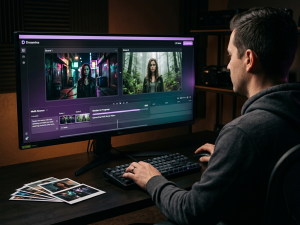
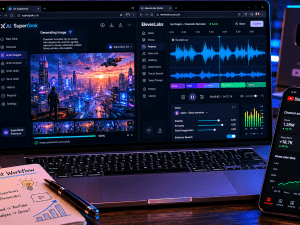
Import the raw asset into CapCut, apply your pre-built vertical canvas template, trim to the precise moment where tension builds rather than where action begins, color-correct for mobile display brightness, add your subtitle layer with accurate fast-paced kinetic text, apply your background audio layer at the appropriate mix level, and export in the highest quality setting your distribution platform accepts.
Building Templates That Multiply Your Output
The template system inside CapCut is the single biggest productivity lever available to independent clippers, and most beginners underuse it significantly.
A properly configured CapCut template stores your canvas dimensions, aspect ratio, subtitle font and animation style, color grading filters, and default audio layers as a single reusable starting point for every new clip. Instead of rebuilding these settings from scratch on each project, you open your template and begin the creative work immediately.
Build at least three distinct templates before you process your first campaign asset. The first template is your high-energy sports or action format — fast subtitle animations, high contrast color grading, punchy sound effects.
The second template is your conversational or interview format — cleaner typography, more balanced color tones, subtle background music.
The third template is your breaking news or trending moment format — bold text overlays, high-visibility captions, urgency-focused visual pacing.
Having these three ready means no campaign type catches you without the right visual framework already prepared.
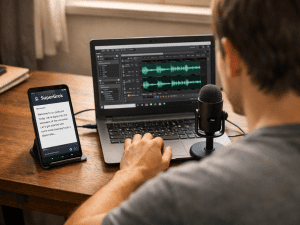
For creators who want to add professional narration without recording their own voice, ElevenLabs produces AI voice narration that integrates seamlessly into this editing workflow.
A thirty-second setup narration before a clip’s core moment significantly increases average watch time and gives your content a production quality layer that most competing clips in the same campaign do not have. That quality gap translates directly into better algorithmic distribution and higher view accumulation rates.
How Much Money Can Video Clippers Actually Make
This is the question every person researching this model wants a direct answer to, and the most honest version of that answer is a range rather than a single figure because earnings in performance clipping scale almost entirely with editing quality, publishing consistency, and time invested in building distribution account authority. Understanding the range and what determines where within it you will fall is more useful than any specific income promise.
Beginners in their first thirty days of consistent operation — publishing five to ten clips daily across at least two platforms — typically generate between twenty and one hundred and fifty dollars in their opening month.
This is a learning and infrastructure phase, and treating it as such rather than as a financial failure is the mindset that keeps successful operators in the game long enough to reach the next tier.
Intermediate operators who have been running consistent daily publishing schedules for sixty to ninety days, have built three to five seasoned distribution accounts with established algorithmic trust, and have developed a reliable instinct for high-retention clip selection typically generate between three hundred and one thousand five hundred dollars monthly.
This range is where most clippers who stick with the model for three months land, and it represents a meaningful supplementary income stream for the majority of people in that tier.
Advanced operators managing multiple niche distribution accounts across all three major short-form platforms, running simultaneous campaigns across several marketplace networks, and maintaining daily publishing output consistently for six months or longer report monthly earnings ranging from two thousand to over five thousand dollars.
These figures represent a full-time independent income, and they are achievable but require treating this as a genuine business operation rather than a casual experiment from day one.
The Mistakes That Quietly Kill Most Clipping Operations
The most destructive mistake new video clippers make is not a technical error — it is a strategic one. Publishing clips without a clear niche identity across your distribution accounts produces confused algorithmic signals that result in poor organic reach regardless of clip quality.
A TikTok account that posts football highlights one day, podcast clips the next, and motivational content the following day never accumulates the focused audience engagement that drives consistent high-view performance. Choose one content identity per account and maintain it without exception.
The second failure pattern is ignoring account health metrics in favor of raw publishing volume. Social media platforms penalize accounts that generate high upload frequency alongside low engagement rates.
Let Me Quickly Share This With You
If your clips are not retaining viewers past the three-second mark, increasing your posting frequency will accelerate the algorithmic suppression of your account rather than compensating for poor performance.
A lower publishing volume of genuinely high-quality, high-retention clips is always more effective than a high volume of mediocre content.
Platform dependency is the third structural mistake that creates unnecessary risk for clippers who are otherwise building their operation correctly. Concentrating your entire distribution infrastructure on a single platform — particularly TikTok given its ongoing regulatory environment in multiple markets — is an operational vulnerability that can eliminate your income source without warning.
Building parallel distribution capacity across TikTok, Instagram Reels, and YouTube Shorts simultaneously from day one is the only risk management strategy that actually protects your operation long-term.
The final mistake worth addressing specifically is the compliance shortcut. Downloading and redistributing official sports broadcast footage without verified rights clearance through a marketplace platform is not a grey area — it results in copyright strikes that can permanently damage or terminate your distribution accounts.
Always source your clip assets through verified marketplace libraries where rights clearance has been handled at the platform level. The short-term temptation of clipping widely-viewed raw broadcast footage is never worth the long-term account damage it reliably causes.
Your Step-by-Step Launch Plan
The first step is platform registration across your entire ecosystem on day one. Create your marketplace accounts on Vyro and Reach.cat, complete your editor profiles with accurate information, and browse the active campaign directories to familiarize yourself with the asset types and payout structures currently available. Join at least one active sports or creator-economy clipping community on Whop where you can observe experienced operators discussing strategy in real time.
The second step is your distribution account infrastructure setup. Create dedicated, niche-specific accounts on TikTok, Instagram Reels, and YouTube Shorts with consistent username formatting, a clear content identity in each profile bio, and an optimized profile image that communicates your content category immediately.
Connect these accounts to your marketplace profiles through the API verification portals. Do not begin publishing campaign clips until this connection is verified and confirmed on each platform.
Follow This Steps Carefully
The third step is your technical workspace configuration. Install CapCut on your primary editing device and build your three core clip templates before you process a single campaign asset.
Test each template by editing one practice clip and reviewing it on a mobile screen — not a desktop monitor — to verify that the pacing, subtitle size, and color contrast all work correctly for the primary viewing environment your audience will use.
The fourth step is your first campaign selection and execution. Choose one campaign from your marketplace dashboard with a clear creative brief, a competitive payout rate, and content category you feel confident identifying high-retention moments in.
Extract three distinct clip concepts from the same long-form asset, edit all three using your pre-built templates, publish them natively across your distribution accounts, submit the live URLs to the marketplace dashboard, and begin tracking performance data.
Repeat this exact sequence daily for thirty days before making any major strategic adjustments based on your results.
The Bigger Picture of What You Are Actually Building
Every creator who sticks with performance-based video clipping for six months or longer reports the same unexpected realization: the income is valuable, but the transferable skill set they have built is worth more than the earnings from any single campaign.
The ability to analyze long-form content and identify its highest emotional and informational density moments, to format and pace video for mobile-first audiences, and to distribute content systematically across multiple platforms simultaneously is a professional skill set with applications across content marketing, social media management, brand consulting, and digital product creation.
The short-form video economy is not a temporary trend built on algorithmic arbitrage. It represents a permanent structural shift in how human attention is captured, distributed, and monetized across the internet.
Brands that spent the last decade buying advertising impressions are now building decentralized creator networks because the economics of organic short-form distribution consistently outperform paid advertising at every audience size.
Understanding The Pattern
The infrastructure that supports that shift — the marketplaces, the editing platforms, the distribution networks — is expanding rather than contracting, and it will continue creating income opportunities for skilled independent operators for years beyond any single tournament cycle or trending moment.
This connects naturally to the broader digital economy skills we cover across FaithfulBiz. Understanding which AI tools genuinely accelerate your workflow becomes significantly more valuable when you are running a production pipeline that benefits directly from faster editing, smarter content research, and automated distribution support.
The clipping business model and the AI tools ecosystem are not separate conversations — they are increasingly the same conversation for creators who want to build scalable, technology-augmented income systems in 2026.
The operators who are earning consistently from video clipping right now did not discover a secret. They simply started earlier than everyone else who is still deciding whether to begin.
That gap closes the moment you stop reading and start building your first template, your first distribution account, and your first campaign submission. The infrastructure is available.
The platforms are operational. The only remaining variable is whether you treat this as a business from day one or as an experiment you will abandon when the first week does not produce the results you were hoping for. Choose the business mindset. Build the infrastructure. The earnings follow the execution, and they always have.

















Join the discussion Tap to open the comment form +