
I didn’t expect to see an email from Google telling me that Opal is going away.
I’ve actually used Google Opal myself. I built things with it, tested what it could do, and even wrote about some of the ways I was using it on FaithfulBiz.
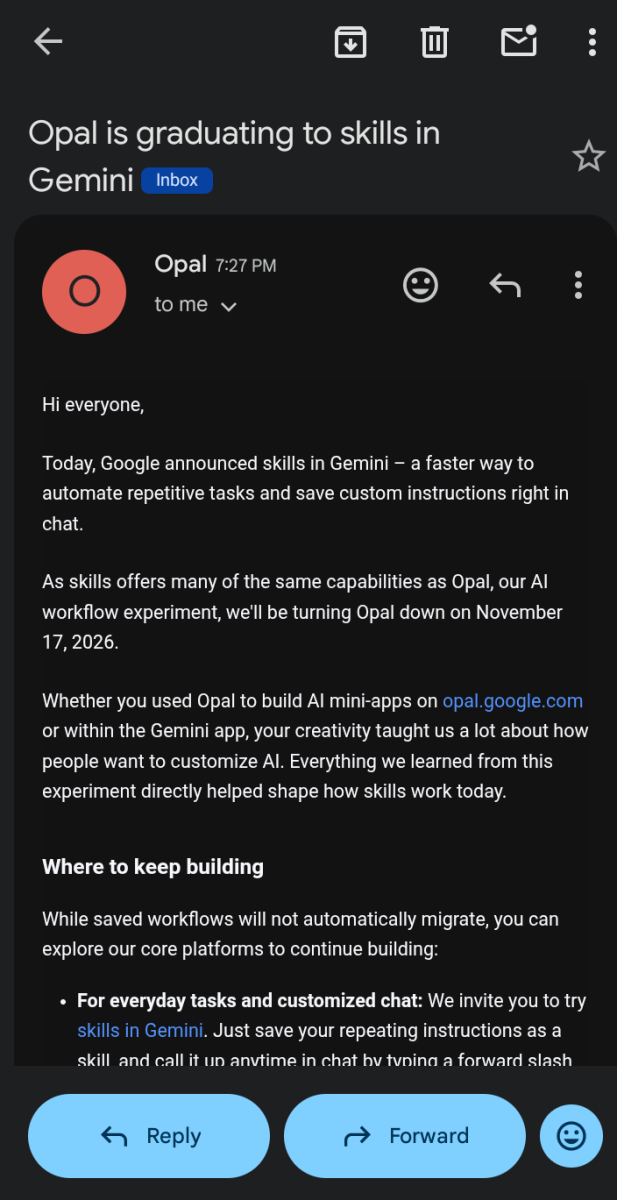
So when Google sent me a shutdown notice saying Opal will be turned down in November 2026, I paid more attention than I normally would to an announcement about an experimental AI tool.
And after reading the email carefully, I think there is a more interesting story here than simply “Google is shutting down Opal.”
Google is not abandoning the idea of customizable AI workflows. It appears to be moving what it learned from Opal into a broader Gemini feature called Skills.
But there are a few things existing Opal users need to understand before November.
Google Is Actually Shutting Down Opal
First, let’s get the straightforward part out of the way.
Google says Opal will be turned down on November 17, 2026, with Opal workflows continuing to work through November 16.
That applies both to the standalone Opal experience at opal.google.com and to Opal features that were available inside the Gemini app.
Google describes Opal as an experiment that allowed people to build AI-powered mini-apps and workflows without having to build everything from scratch manually.
I’ve used it myself, so I know why this isn’t just another AI product that I tried once and forgot about.
Opal made the process of turning an idea into a working AI workflow surprisingly accessible.
And that’s precisely why the next part of Google’s announcement caught my attention.
Google Says Opal Helped Shape What Comes Next
In the shutdown email, Google says Skills offer many of the same capabilities as Opal.
More importantly, Google says that what it learned from the Opal experiment helped shape how Skills work today.
That changes how I look at this shutdown.
Instead of seeing Opal as an experiment that simply failed and disappeared, I see it more as something Google is folding into a larger Gemini strategy.
Google has already been moving toward making Gemini more customizable. Its current Skills system lets users save reusable instructions and have Gemini apply them across chats and tasks. Skills can also be combined to create more complex workflows. Google’s documentation explains how Skills work.
So the interesting question isn’t really “What happened to Opal?”
It’s “What did Google learn from Opal that it now wants to make part of Gemini?”
What Happens to the Opal Workflows You Already Built?
This is the part I would pay the most attention to if you’ve actually built something with Opal.
Google says your saved workflow files will remain in your personal Google Drive.
They are stored in a folder called Opal inside My Drive, and Google says it will not delete those files when Opal shuts down.
But there’s an important distinction here:
Your files staying in Google Drive does not mean your Opal workflows will keep working.
Google says that after the visual runner is turned off, those workflows will no longer run interactively.
That’s a big difference.
You can keep the files, but the service that actually runs the workflows is going away.
There Is Also No Automatic Opal Workflow Migration
This is another detail I would not overlook.
Google’s email says saved Opal workflows will not automatically migrate.
If there are custom prompts or instructions inside workflows that you care about, Google recommends opening those workflows before the shutdown and copying the prompt text.
In other words, don’t assume that because your Opal folder survives, your actual creations have been preserved in a form you can simply continue using.
If I had an Opal workflow that I genuinely depended on, I would preserve the important instructions myself rather than waiting to see what happens after November 16.
So Is Gemini Skills the Replacement for Opal?
Sort of — but I wouldn’t describe it as a simple one-for-one replacement.
Google is positioning Skills as a way to save reusable instructions so Gemini can repeatedly perform tasks according to your preferences.
You can create a Skill around a particular workflow, call it from Gemini, and in supported situations Gemini can also recognize when a Skill is relevant to what you’re asking it to do.
Google also says Skills can be combined, which means multiple Skills can work together as part of a larger task.
That is a different experience from opening a visual workflow builder and connecting individual steps together in Opal.
And that distinction matters.
Opal was interesting partly because you could see the workflow you were building. Skills are much more focused on giving Gemini reusable instructions and letting the AI handle more of the execution.
Google’s current documentation also says that Gems are transitioning to Skills in November, with personal Google accounts affected first. Google says Workspace business, enterprise and nonprofit accounts are scheduled for March 2027, while education accounts are scheduled for June 2027.
That tells me this is bigger than Opal alone.
I’ve Used Opal, and This Is the Part I Find Interesting
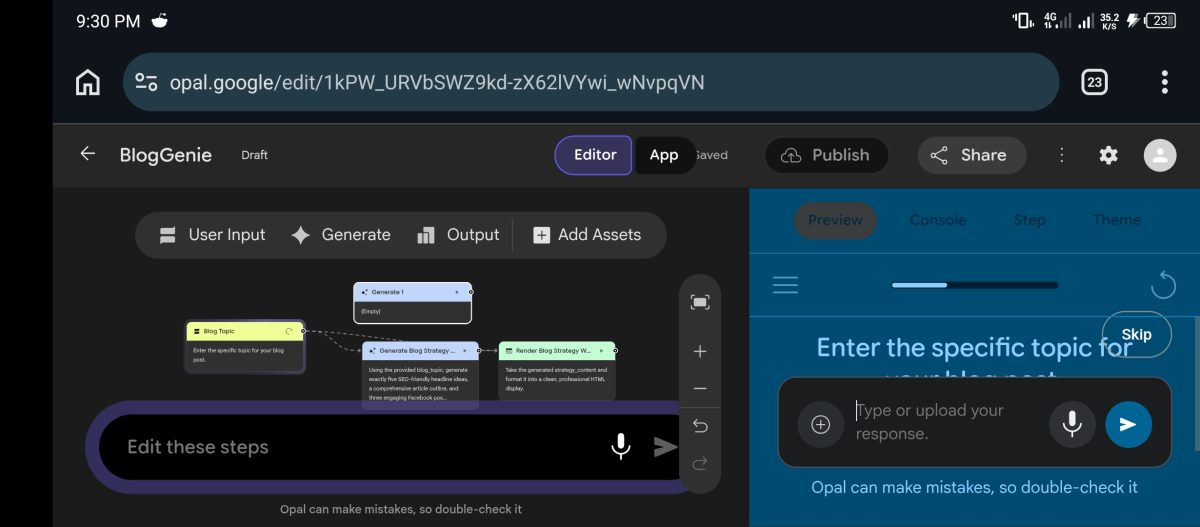
I’ve written about Google Opal before because I wasn’t just watching other people demonstrate it. I actually used it to build things.
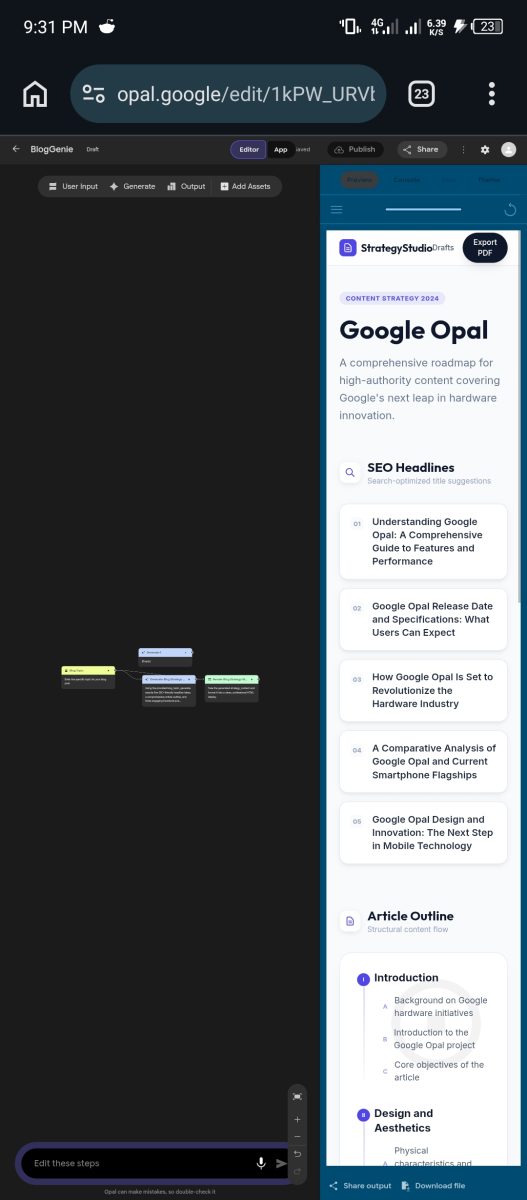
At the time, my interest was simple: could someone without a traditional software-development workflow use Opal to turn an idea into something useful?
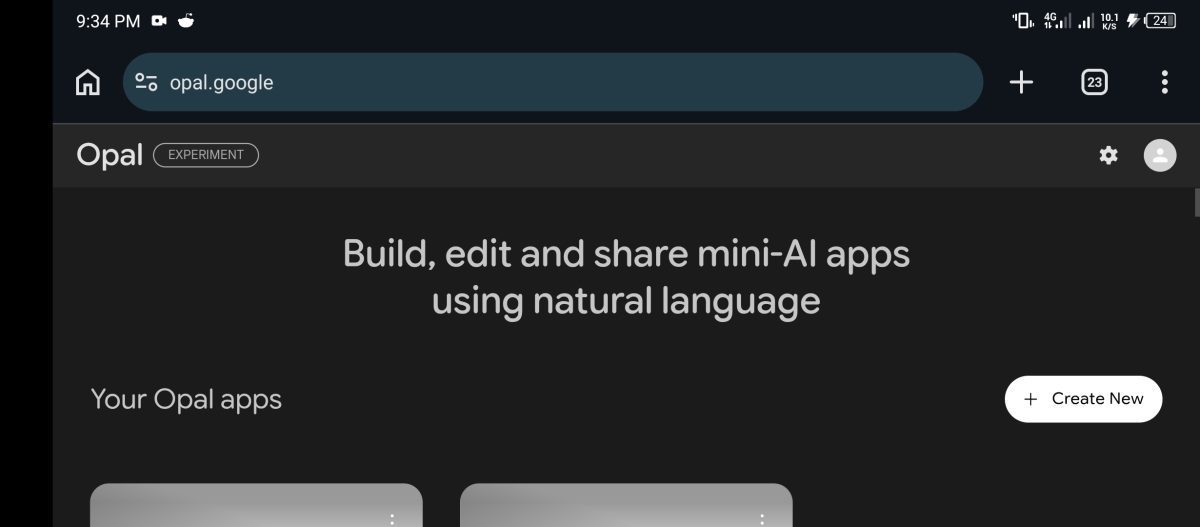
That was the appeal.
You could experiment quickly, build something, see what worked and then improve it.
That’s also why I don’t think the shutdown should be interpreted simply as Google deciding that AI workflow builders are no longer useful.
The opposite may be closer to what is happening.
Google appears to be taking the underlying idea — let people teach the AI how they want recurring work done — and pushing it directly into Gemini.
But There Is One Problem for Users Like Me
When you build around an experimental AI product, you’re also accepting a certain amount of risk.
I have written about this before in a completely different context, when ChatGPT Atlas was shut down less than a year after launch.
The lesson is not that experimental AI tools are useless.
The lesson is that you should be careful about making an experimental product the permanent foundation of something important.
Opal is a good example.
You could spend hours building a workflow, refining it and figuring out how to make it useful. Then the company can decide that the underlying idea belongs somewhere else.
In this case, Google is at least telling users what is happening and where it wants them to go next.
What I Would Do Before November 16
If you’ve built anything with Opal that you actually care about, I wouldn’t wait until the final day.
- Open your important Opal workflows while they still work.
- Copy your custom prompts and instructions somewhere you control.
- Check your Google Drive Opal folder so you know what files you have.
- Save anything you may need to rebuild the workflow later.
- Don’t confuse saved files with a working workflow. Google says the files will remain, but the visual runner will stop working.
- Look at Gemini Skills if the type of work you built in Opal can be expressed as reusable instructions.
I’d also take screenshots of anything complicated enough that I might forget how I originally structured it.
One Detail Nigerian Users Should Know
There is another reason I’m not rushing to tell everyone to simply “move to Skills.”
Google’s current Skills documentation says availability is still being rolled out and specifically lists Nigeria among the locations where Skills are currently unavailable.
So if you’re reading this from Nigeria, the transition may not be as straightforward as Google’s email makes it sound.
That is worth checking against Google’s current availability information before assuming that Skills are already available on your account.
This is also a good reminder that AI product announcements can sound universal when availability actually depends on your account, location and the stage of the rollout.
What I Think the Opal Shutdown Really Means
I don’t think the most interesting part of this announcement is that another Google Labs experiment is disappearing.
Google Labs experiments disappear. That’s what makes them experiments.
What interests me is what Google is keeping.
The company isn’t walking away from the idea of giving ordinary users more control over how Gemini performs recurring tasks. Instead, Google is moving toward Skills, where those instructions can live directly inside the Gemini experience.
For me, that makes the Opal shutdown feel less like the end of an idea and more like the end of one implementation of that idea.
Whether Skills eventually becomes a better home for what made Opal interesting is something users will have to test for themselves.
But if you’ve spent time building with Opal, I wouldn’t treat the November shutdown as something to worry about later.
Save the parts of your workflows that matter to you now.
Because the files may stay in your Drive, but the Opal system that made them interactive is not coming with them.
What Happens Next?
For now, I’m keeping an eye on what Google does with Skills because the interesting part of this story is no longer just what happens to Opal.
It’s whether Google can take what people learned while experimenting with Opal and turn it into something that is genuinely useful inside Gemini.
I’ve already used the old system. Now I’ll be watching what Google does with the next one.


















Conversation (0)