

Not long ago, artificial intelligence felt like something reserved for companies with research departments, multi-million dollar technology budgets, and teams of engineers to manage it all. The word itself carried a weight that pushed most small business owners into the position of observer rather than participant.
That is no longer the situation.
According to the US Chamber of Commerce, 58 percent of small businesses in the United States now use AI regularly — up from 40 percent in 2024. Thryv’s annual survey found that AI adoption among small businesses surged 41 percent in 2025 alone. JP Morgan Chase, using actual transaction data from small business banking accounts rather than self-reported surveys, tracked AI-related payments from 17.7 percent of small business accounts by December 2025, up from near zero before 2023.
The question is no longer whether AI is relevant to small businesses. The evidence is settled on that point. The question worth answering now is more specific: where does AI actually deliver results for a small operation with limited time, limited budget, and no internal technology team? And where does it disappoint?
This post answers both questions directly, using current research rather than theory.
Why the Adoption Gap Between Small and Large Businesses Is Closing Fast
Previous technology adoption cycles followed a predictable pattern. Large enterprises adopted first. Small businesses followed years later, often with older, cheaper versions of the same tools. Broadband internet, for example, reached urban businesses nearly a decade before it became reliably accessible to small businesses in rural areas.
AI is following a fundamentally different pattern. In February 2024, the SBA Office of Advocacy found that large businesses used AI at 1.8 times the rate of small businesses. By August 2025, that gap had narrowed to 1.2 times — with small business adoption growing faster while large enterprise adoption had plateaued. The SBA’s own analysis described this as unprecedented: small businesses closing the gap in months rather than years.
What Is Driving This Acceleration
The answer is access. ChatGPT, Claude, and Gemini are available to a sole trader in Lagos or a two-person shop in Birmingham on exactly the same terms as they are available to a Fortune 500 company. There is no enterprise licensing requirement. There is no minimum team size. The tools are cloud-based, affordable, and in many cases free at the entry level.
For small businesses, where every hour saved matters more than it does in a large organisation with redundant capacity, the impact of AI on a lean team is proportionally larger. This is why 83 percent of growing small businesses have adopted AI compared to just 55 percent of declining ones, according to data compiled from SBA longitudinal analysis. AI adoption has become a reliable indicator of business trajectory — not because the tools are magic, but because the businesses using them are investing in efficiency while their peers are not.
Where AI Actually Delivers for Small Businesses
Research across multiple independent sources identifies the same two categories as consistently delivering the strongest return on investment for small businesses: marketing and customer service. Everything else is secondary. Understanding why helps you prioritise where to start.
Marketing: The Clearest Return on Time
HubSpot’s 2025 State of Marketing report found that small businesses save between five and fifteen hours per week on marketing tasks when they use AI assistance for content production. That is not a marginal gain. For a business owner who is personally responsible for writing social media captions, drafting email campaigns, creating product descriptions, and managing ad copy alongside everything else they do, five to fifteen hours is transformative.
The specific tasks where AI consistently saves the most time are content generation, ad copy variations, email subject line testing, and social media scheduling. A marketing coordinator who previously spent four hours drafting a week’s worth of social posts can produce the same output in under an hour using AI assistance. Advanced analytics tools show a 20 percent improvement in marketing return on investment when AI-powered targeting and personalisation are applied to campaigns.
One e-commerce company, Dukier, documented AI-attributed revenue growth from €82,857 in 2022 to €518,860 in 2025 — a 525 percent increase — after implementing AI-powered email marketing automation through Omnisend. Their welcome series reached a 63 percent open rate and a 22 percent conversion rate. These are not typical results. But they illustrate the ceiling of what is achievable when the implementation is deliberate and the measurement is rigorous.
Customer Service: Speed and Availability That Small Teams Cannot Match Alone
The second strongest area is customer service, and the data here is particularly striking for small businesses that cannot afford to staff support around the clock.
AI-powered chatbots now handle 40 to 60 percent of routine customer inquiries without human intervention — order status checks, return policies, appointment scheduling, and basic troubleshooting. For businesses that previously relied on a single person checking email twice a day, this represents a qualitative shift in what customers experience.
Freshworks’ CX Benchmark Report documents that AI-powered support reduces first response times from over six hours to under four minutes. Resolution times in some implementations dropped from 32 hours to 32 minutes. Customer satisfaction scores in companies using AI support rose from 89 percent to 99 percent in tracked cohorts. These improvements are not primarily about replacing human agents — 95 percent of customer service leaders surveyed plan to retain their human staff. They are about handling the volume that was previously impossible for small teams to address without delays that cost customers.
The average return on AI investment in customer service is $3.50 for every $1 invested, according to Fullview research. Leading implementations reach 8x return. For a small business evaluating whether the cost of a chatbot platform makes sense, those ratios are the right starting point for the calculation.
Key Areas Where Small Businesses Are Applying AI Right Now
Finance and Operations
Financial management has historically been one of the most time-consuming and error-prone areas of running a small business. AI-powered bookkeeping tools automate expense categorisation, flag anomalies, generate invoice reminders, and forecast cash flow based on historical patterns. For inventory-dependent businesses, AI tracks sales trends and recommends restocking timing — reducing waste from overstocking and lost sales from shortages.
JP Morgan Chase’s transaction analysis found that targeted AI automations can cut manual invoice processing time by up to 80 percent, while also saving 2 to 3 percent per invoice by capturing early-payment discounts and avoiding late fees. For a business processing 200 invoices monthly, that compounds into significant annual savings.
Payment platforms used widely in African markets — including Paystack and Flutterwave — are integrating AI-driven fraud detection that gives small business owners stronger protection against risks that previously required either accepting losses or paying for expensive third-party security.
Sales and Lead Management
AI lead scoring tools analyse behavioural signals — website visits, email engagement, content interactions, and company characteristics — to rank leads by their conversion probability. For a small sales team working through a list of 200 leads, the order in which they make contact matters enormously. AI prioritisation ensures the highest-probability opportunities get attention first, which directly improves conversion rates without increasing headcount.
AI-powered CRM platforms like HubSpot and Zoho now automate follow-up sequences, surface contact insights before calls, and flag deals at risk of going cold. A small business with two salespeople can now deliver the responsiveness and personalisation that previously required a team of ten.
Decision-Making and Business Intelligence
One of the underappreciated applications of AI in small business is its ability to surface patterns in data that would otherwise remain invisible. A local gym that connects its membership system to an AI analytics tool can discover that sign-ups spike in January and drop in June — then design targeted mid-year promotions to address the retention gap specifically. Instead of guessing or relying on intuition shaped by limited visibility, decisions are grounded in what the actual data shows.
A bakery that integrates its point-of-sale system with an AI tool can send personalised offers to regular customers at precisely the right moment — a Sunday evening discount reminder to someone who buys coffee and croissants every Monday. This level of personalisation builds loyalty in a way that generic promotions cannot replicate, and it runs automatically once set up.
The Honest Picture: Where AI Disappoints
Balanced coverage of this topic requires honesty about the failure rate, and it is significant.
An MIT report published in the summer of 2025 found that 95 percent of generative AI pilot programmes are failing to deliver expected returns. IBM’s analysis from Q4 2025 found that only 25 percent of AI initiatives deliver expected ROI, and only 16 percent have scaled enterprise-wide. Only 29 percent of executives say they can reliably measure their AI ROI at all.
Why Most AI Implementations Fail
The consistent finding across IBM’s Think Circle analysis, McKinsey research, and independent case studies is that AI failure is almost never a technology problem. It is an organisational one. Culture, governance, workflow design, and data quality are the primary barriers — and all four are within the control of the business owner rather than dependent on the tools themselves.
A particularly significant finding: 80 percent of failed AI projects fail because of bad data rather than bad AI. If your customer records are scattered across three different spreadsheets, your product inventory exists in a format that no tool can read cleanly, and your sales history has gaps — AI has nothing reliable to work with. Organising your operational data before implementing AI is not optional preparation. It is the prerequisite that determines whether the implementation works at all.
There is also a governance gap worth naming directly. An estimated 77 percent of small businesses using AI have no written AI policy. This creates specific liabilities: employees uploading sensitive client data to public AI tools without understanding the privacy implications, AI-generated content published without verification that contains hallucinated facts, and vendor lock-in that becomes expensive to unwind. The businesses that differentiate themselves are not the ones that adopted AI fastest — they are the ones that adopted it most deliberately.
The Tools Worth Knowing About
Rather than an exhaustive list, here are the tools consistently recommended across small business communities and validated by actual adoption data.
For Writing, Communication, and Ideation
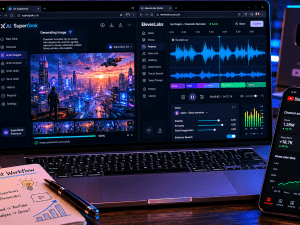
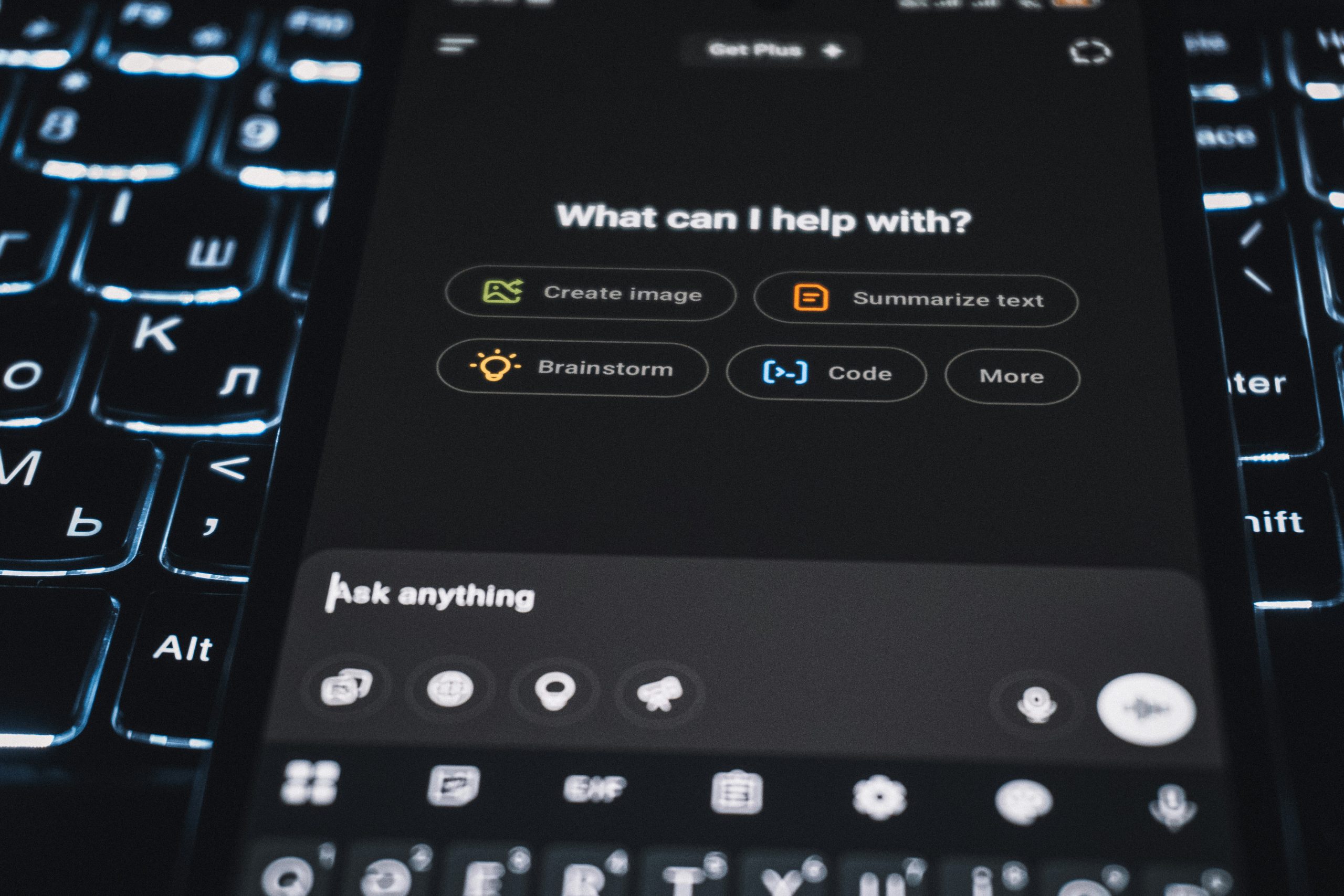
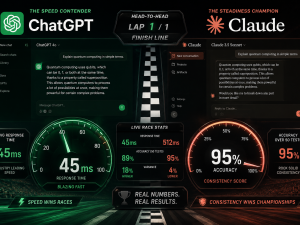
Claude, ChatGPT, and Gemini are the three most widely used general-purpose AI assistants. Each has strengths worth understanding. Claude tends to produce cleaner prose and handles long documents more effectively. ChatGPT offers broader utility with web browsing, image generation, and a large ecosystem of integrations. Gemini integrates directly into Google Workspace, which makes it the most frictionless option for businesses already using Google Docs, Gmail, and Sheets. All three have free tiers sufficient to test whether they fit your workflow before committing to a paid plan. This breakdown of AI tools that actually deliver results covers them in more practical detail.
For Customer Service
Tidio’s Lyro AI is specifically designed for small and mid-sized businesses. It can be trained on your existing product documentation, FAQ pages, and support history in hours rather than weeks. The AI learns your voice, your policies, and your product catalogue, then handles incoming queries consistently. For businesses that cannot afford a dedicated support team, the 24-hour availability alone represents a meaningful service upgrade.
For Marketing Automation
HubSpot’s marketing tools combine AI-powered content creation, CRM integration, and campaign automation in a platform that scales from small to mid-sized business needs. Omnisend is particularly strong for e-commerce businesses, connecting store data to email and SMS marketing automation with AI personalisation at the product level. Canva’s AI features handle visual content production for businesses without design resources. The full AI toolkit for small business and freelance use gives you a practical workflow across all of these categories.
For Automation and Operations
Zapier connects over 7,000 apps and automates repetitive workflows between them without coding. The time savings from automation are compounding rather than one-time — a workflow automated today runs in the background every week indefinitely. Wave handles accounting and invoicing at no cost for businesses at the early stage. Microsoft Copilot integrates AI assistance into Word, Excel, and Teams for businesses already in the Microsoft ecosystem.
A Practical Roadmap for Getting Started
The most common obstacle is not access to tools. Thryv’s research found that 74 percent of small businesses in the “explorer” stage — interested but not yet committed — would adopt AI with clearer evidence of ROI. The problem is not scepticism. It is uncertainty about where to begin.
Phase One: Identify One High-Friction Task
Start by identifying the single task in your current workflow that consumes the most time relative to the value it produces. Not five tasks. One. For most small businesses, this is either content production, customer inquiry management, or repetitive administrative work. The specificity matters — “I want to use AI to grow my business” is too broad to act on. “I want to reduce the time I spend writing social media captions from four hours to one hour per week” is an actionable starting point.
Phase Two: Choose One Tool and Use It Daily for Three Weeks
Adopt one tool that directly addresses the friction point you identified. Use it every day for three weeks before evaluating whether it is working. Most tools require a short learning curve before they become faster than doing the task manually. Abandoning after three sessions is the most common reason people conclude “AI didn’t work for me” — when the actual issue was insufficient practice.
Phase Three: Measure Before You Scale
Track whether the tool is saving the time you expected, improving the quality of the output, or increasing the measurable outcome you care about. Time saved is the easiest metric to track at the start. Customer response rate, conversion from inquiry to sale, or content engagement are appropriate secondary metrics once the basic workflow is established.
Phase Four: Expand Deliberately
Once the first tool is embedded in your workflow and producing consistent results, identify the next highest-friction task and repeat the process. The businesses generating the strongest returns from AI are not the ones that adopted the most tools simultaneously. They are the ones that adopted tools sequentially, with clear measurement between each phase, until AI had quietly become embedded in every part of their operation that benefited from it.
The Bigger Picture
The US Chamber of Commerce found that 82 percent of small businesses now believe AI adoption is essential to staying competitive. That figure was not true two years ago. It reflects a genuine shift in how small business owners perceive the stakes — not because they have been sold on hype, but because they are watching competitors who adopted earlier move faster, serve customers better, and make decisions more confidently.
The businesses that will look back on this period positively are not the ones that moved fastest or adopted the most tools. They are the ones that were deliberate — who identified specific problems, chose appropriate tools, measured results honestly, and built incrementally from genuine wins rather than chasing novelty.
AI does not replace the judgment, relationships, and domain expertise that make a small business worth going to. It amplifies them. It handles the repetitive, the administrative, and the time-consuming — freeing the owner and their team to focus on the parts of the work that only they can do.
That combination, human expertise amplified by AI efficiency, is where the real competitive advantage sits. It is available to any business willing to start deliberately and measure carefully. The only required investment is time and attention, not a technology budget that small businesses do not have.
If you want to understand how to build the skills that make you more effective with these tools, this guide on using AI to upskill and earn connects directly to the practical capability you need to make any of this work. And if you want to understand where the real income opportunities sit in the AI landscape right now, this honest breakdown of what actually pays gives you the clearest picture available.


















Join the discussion Tap to open the comment form +