
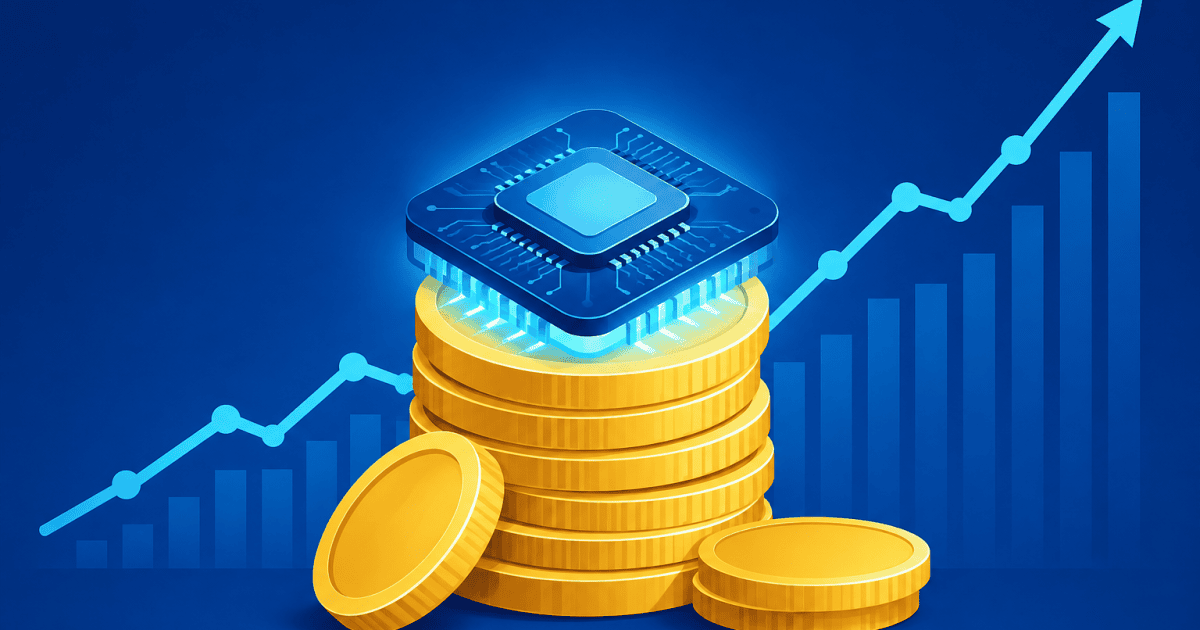
A computer chip company just did something no company has ever done before. It turned computer chips into a brand new way for the whole world to invest money.
The company is called Nvidia. You may not know the name, but you have felt what it makes. Nvidia builds the chips that power almost every big AI tool people use today, things like ChatGPT and other AI helpers.
On Monday, August 10, 2026, Nvidia said something huge. It is teaming up with six of the biggest money companies in the world. Together, they want to gather over $500 billion to build more AI computer centers around the world.
That number is hard to picture. So let’s slow down and explain it in plain, simple words.
Key Takeaway
Nvidia is not lending $500 billion out of its own pocket. It signed memorandums of understanding, a kind of early agreement, with six giant investment companies to raise that money from outside investors instead, so Nvidia’s own business does not carry all the risk. Nvidia still keeps a smaller piece of the risk for itself, up to $125 billion, to show it believes in the plan.
What Nvidia Actually Announced
Nvidia signed memorandums of understanding with six companies. That is a fancy term for an early, written agreement that is not yet a fully finished deal. The final terms still need to be worked out.
The six companies are Apollo, BlackRock, Blackstone, Brookfield, Goldman Sachs, and KKR. These are some of the largest money management companies on Earth. Together, they manage trillions of dollars for other people.
The plan is simple to say, even if it is big in size. These six companies will help gather over $500 billion from investors around the world. That money will go toward building AI computer centers, sometimes called data centers. These are giant buildings full of computers that run AI programs.
Nvidia’s own boss, a man named Jensen Huang, said this is a big moment. He said Nvidia used to just build chips. Now, he said, Nvidia is helping build a brand new kind of investment, something people can put money into the same way they might invest in a building or a toll road.
Why Is This Such a Big Number?
Half a trillion dollars is one of the biggest amounts of money ever gathered by one company’s plan. To help it feel real, think about SpaceX, the rocket company owned by Elon Musk. SpaceX became a public company in June 2026 and raised $75 billion in its very first day of stock trading. That was the biggest first-day stock sale in history at the time.
Nvidia’s plan aims to raise more than six times that amount. It will not happen in one single day like SpaceX’s stock sale did. It will happen slowly, deal by deal, over time. But the size of the goal shows just how much money the world’s biggest investors think AI is worth chasing.
Why Is Nvidia Doing This At All?
Here is the simple reason. Nvidia’s chips are very expensive. The companies that want to buy them, like big tech firms and AI labs, need huge amounts of money to afford them.
So Nvidia has often helped its own customers pay for its own chips. Many companies do this. It is a normal business habit, not a strange one on its own.
But in July 2026, news came out that Nvidia was in talks to guarantee up to $250 billion for a giant data center being built for OpenAI, the company behind ChatGPT. Nvidia was also reportedly discussing a separate plan to help OpenAI pay $350 billion for Nvidia chips. If you have ever wondered how to pay for tools like ChatGPT from Nigeria, it is worth knowing that the company behind it is part of some of the biggest money conversations happening in the world right now.
That worried some people who own Nvidia stock. If Nvidia keeps promising huge amounts of money to its own customers, that promise becomes a risk sitting on Nvidia’s own books. If something ever went wrong, Nvidia itself could be in trouble.
This new $500 billion plan is Nvidia’s answer to that worry. Instead of Nvidia carrying all the risk alone, outside investors carry most of it instead.
How Will the Money Actually Be Raised?
There are two normal ways any company or country raises large sums of money. One way is called equity. That means selling small pieces of a business to investors, like selling shares of stock.
The other way is called debt. That means borrowing money and promising to pay it back later, with extra money added on top as a fee. Bonds are one common form of debt. A bond is really just a loan, written down on paper, that any investor can buy a piece of.
In this case, the six big investment companies plan to package the deals mostly as bonds and private loans, using Nvidia’s chips themselves as the collateral, the thing backing the loan if something goes wrong. Goldman Sachs is the only traditional bank in the group of six, and reporting from multiple outlets confirms it is positioned to lead the public bond sale. That means everyday investment funds, insurance companies, and pension funds could end up owning a small piece of this debt without most people ever noticing.
What Nvidia’s Own Words Mean
Jensen Huang called AI computing power an “investable asset.” In plain words, he means AI chips and data centers can now be treated like other things people invest in, such as buildings, toll roads, or airports. Those things earn steady money over many years. Huang is saying AI infrastructure can work the same way.
He also said Nvidia itself could provide up to $125 billion of the total amount, or about 25 percent. This is structured as a backstop, meaning Nvidia has the option to step in and cover part of a deal if it needs to. Having some of its own money on the line shows Nvidia believes in the plan enough to share some of the risk, not just hand the whole thing to outside investors.
The Risk Almost Nobody Is Talking About Yet
Here is a detail worth knowing that goes beyond the headline number. When you use chips as collateral for a loan, the lender is betting that those chips will still be worth something years from now. Fitch, one of the major companies that rates how safe an investment is, has opened a public review asking whether chip aging and falling resale value should be built into how these new AI bonds get graded. There is no settled answer yet.
On top of that, some analysts are watching how fast China is building its own AI chips as a separate risk. If cheaper competing chips flood the market, older Nvidia chips used as collateral could lose value faster than expected. None of this means the plan is doomed. It just means the safety of this new investment has not been fully tested yet, because nothing quite like it has existed before.
What This Means for Regular People
For most of this year, people were not asking whether AI actually works. They were asking a different question. They wondered whether big tech companies would run out of money before they finished building it.
Big tech companies have mostly been paying for AI out of their own savings so far. Even rich companies do not have savings that last forever. This new plan answers that worry in a different way. It shows that Wall Street’s biggest investors are willing to hand over huge sums of outside money to keep the AI buildout going.
That does not mean all the risk has disappeared. There is still $500 billion of debt that has to be paid back one day. Investors will expect real profits in return, not just promises. Nvidia’s own stock actually dropped about 3 percent right after this announcement, a sign that not everyone on Wall Street is fully convinced yet.
Under this new structure, though, if something does go wrong, most of the loss would land on the big investment companies, insurance firms, and bondholders involved, not on Nvidia alone. The biggest question left standing is no longer whether tech companies can find the money. Wall Street just proved they can. The real question now is whether enough people and businesses actually use AI tools enough to pay all this money back over time. This is exactly the kind of demand that already shapes daily life for anyone building income around AI tools, since the whole industry now runs on a bet that this usage keeps growing.
The Simple Version
Nvidia is not just a chip company anymore. It is now helping build an entirely new kind of investment out of AI computing power itself. Six of the world’s biggest investment companies are willing to bet more than $500 billion that AI keeps growing. Nvidia is keeping a smaller slice of that bet for itself too.
Whether that bet pays off depends on one simple thing. Enough people and businesses around the world need to actually use AI enough, and pay for it enough, to make all of this money come back around. This piece explains what happened and why it matters. It is not financial advice, and anyone thinking about investing around this story should look closely at their own situation, or talk to a licensed financial advisor, before making any decisions.



























Conversation (0)